A2A E-Mobility deployed a Pixii PowerShaper battery energy storage system (BESS) at its Power Hub in Monza, Italy, to support ultrafast EV charging. The solution combines 100 kWh of battery energy storage, rooftop solar PV, an Energy Management System (EMS), and five 300 kW DC chargers to reduce grid demand while enabling up to 12 simultaneous charging sessions.
| Customer | A2A E-mobility |
| Location | Monza, Italy |
| Industry | EV charging infrastructure |
| Application | Ultrafast EV charging |
| Products | Pixii PowerShaper |
| Functions in use | Peak shaving, load balancing, PV self-consumption |
| Usage | Support ultrafast EV charging and optimize local energy usage |
| Value proposition | Modular, scalable, and grid-supportive energy infrastructure |
| Solution | 2 x Pixii PowerShaper |
| Capacity | 100 kWh, LiFePO4 (LFP) |
| Charging infrastructure | 5 × 300 kW DC chargers + 1 × 14 kW AC charger |
| Solar PV | 11kWp |
Context
As electric vehicles become a larger part of everyday transportation, EV charging infrastructure must handle higher power demands, more simultaneous charging sessions, and increasing pressure on local grids – especially in busy urban areas.
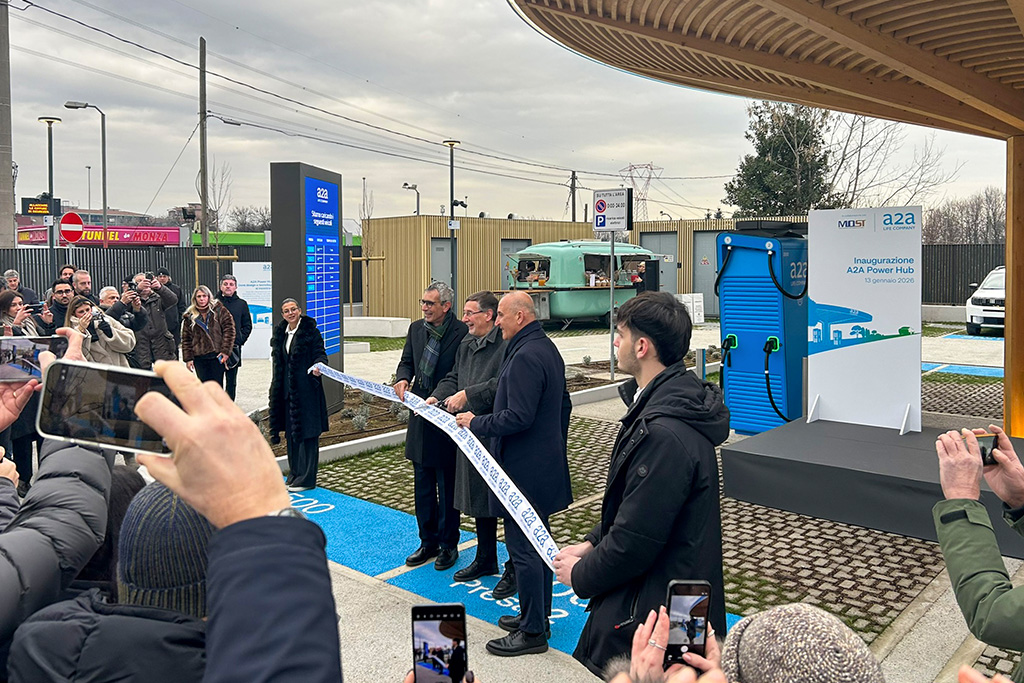
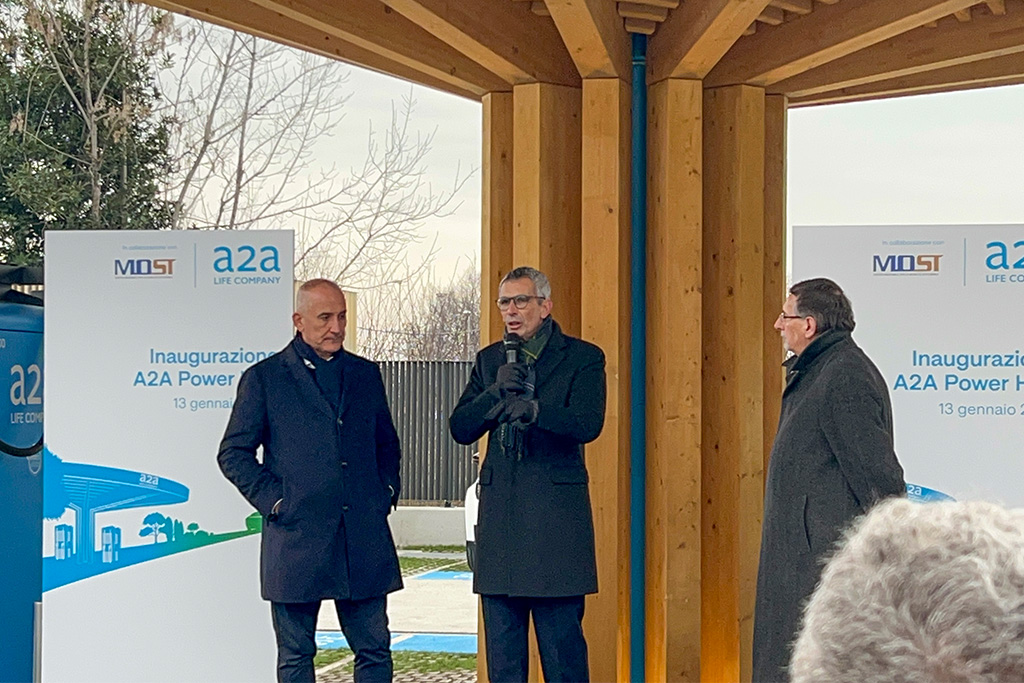
To help address this challenge, A2A launched its first Power Hub in Monza, Italy. Designed as a next-generation EV charging site, the project combines ultrafast charging, solar power, battery energy storage, and intelligent energy management in one integrated solution.
Pixii contributed to the project with modular battery energy storage systems designed to support the charging infrastructure and optimize energy usage across the site. By adding local energy storage capacity directly into the system, the solution helps reduce peak demand from the grid, maintain stable charging performance, and improve overall operational efficiency during periods of high usage.
The challenge
Ultrafast charging hubs place significant and rapidly changing demands on local energy infrastructure. At the Monza site, A2A needed to deliver charging power to support up to 12 vehicles charging simultaneously.
Providing this level of charging performance in a reliable and efficient way required more than simply installing high-power chargers. The site also needed to manage energy flows intelligently between the grid, solar PV, battery storage, and charging demand – while reducing unnecessary stress on the local grid.
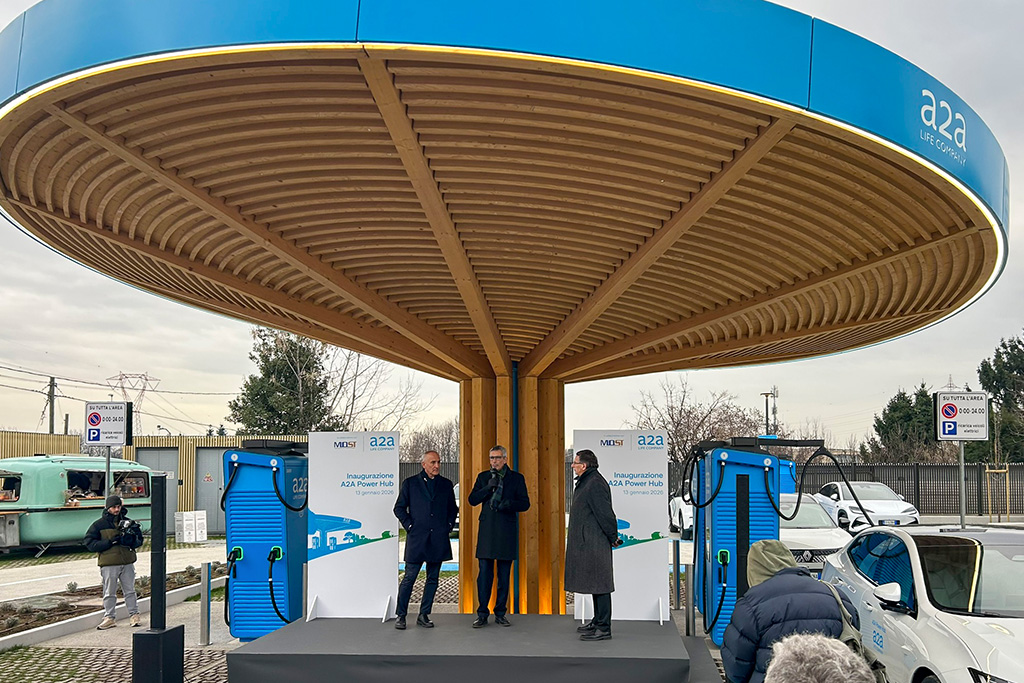
At the same time, A2A wanted the site to offer a modern and user-friendly charging experience, while also contributing positively to the surrounding urban environment through features such as permeable paving, rainwater harvesting, and green landscaping.
The solution
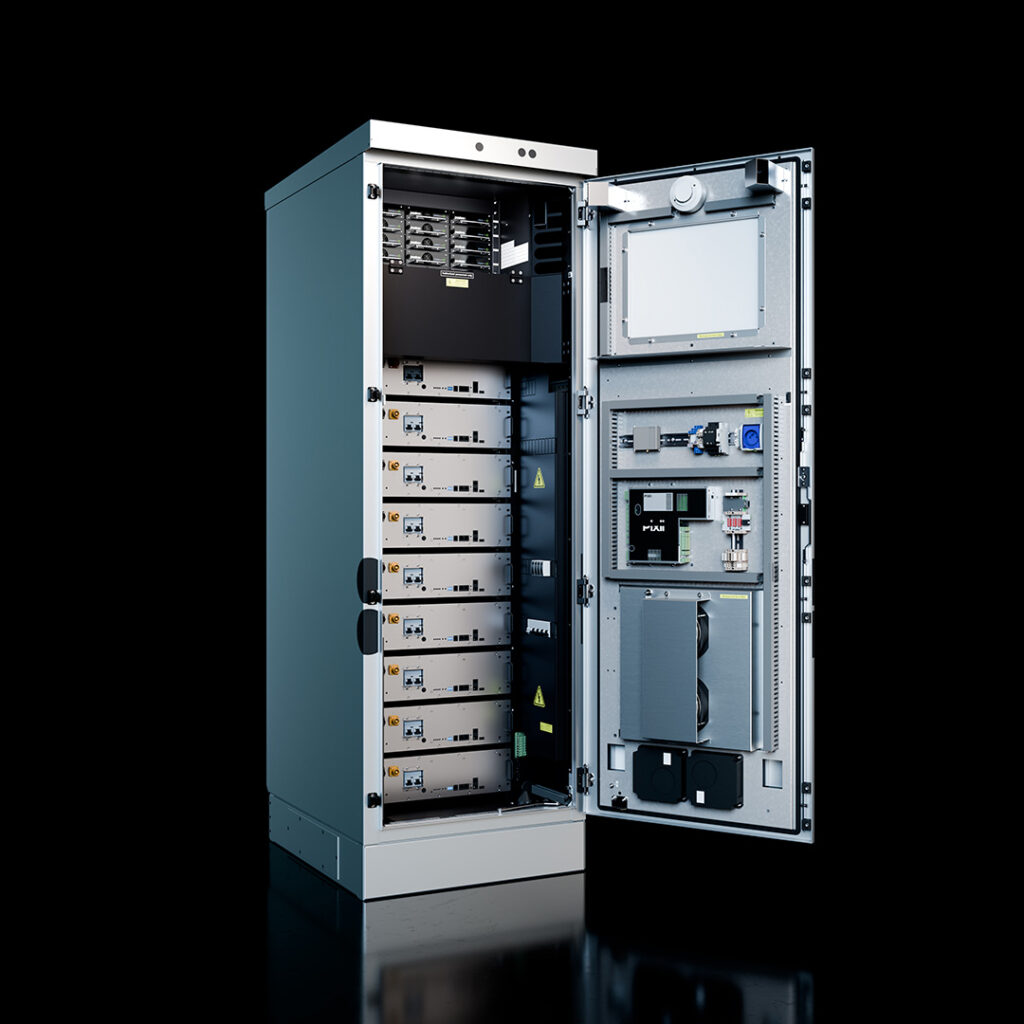
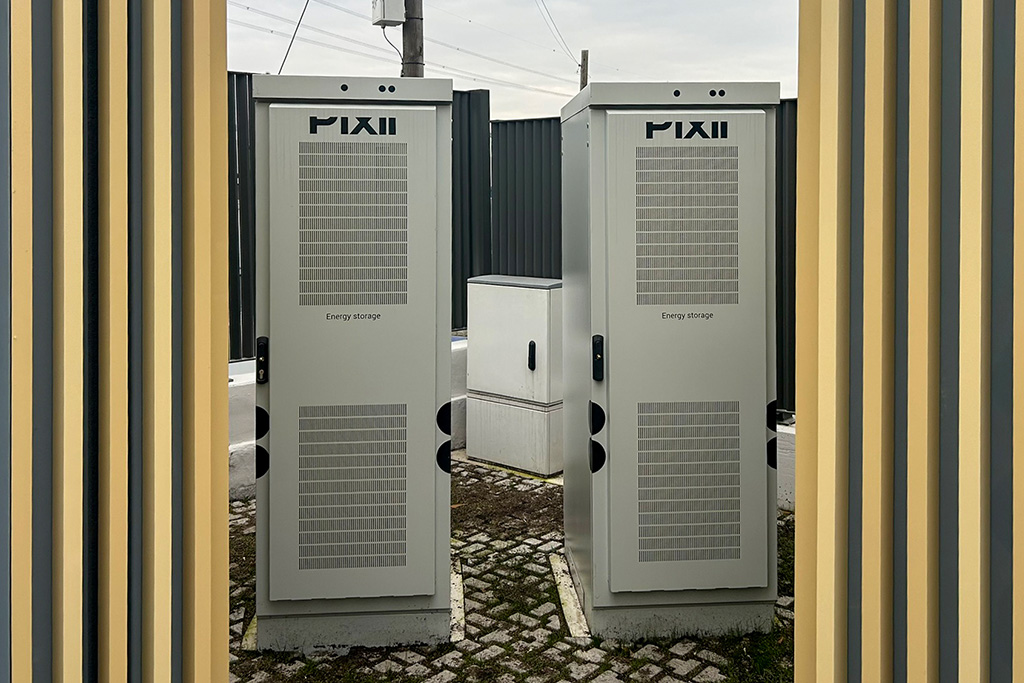
To support the charging infrastructure, Pixii delivered two modular PowerShaper battery energy storage systems (BESS) integrated into the site’s Energy Management System (EMS).
About Pixii PowerShaper
Pixii PowerShaper is a modular Battery Energy Storage System (BESS) designed for commercial and industrial applications such as EV charging hubs, renewable energy integration, and peak shaving. It helps operators reduce grid constraints, improve energy efficiency, and scale charging infrastructure as demand grows.
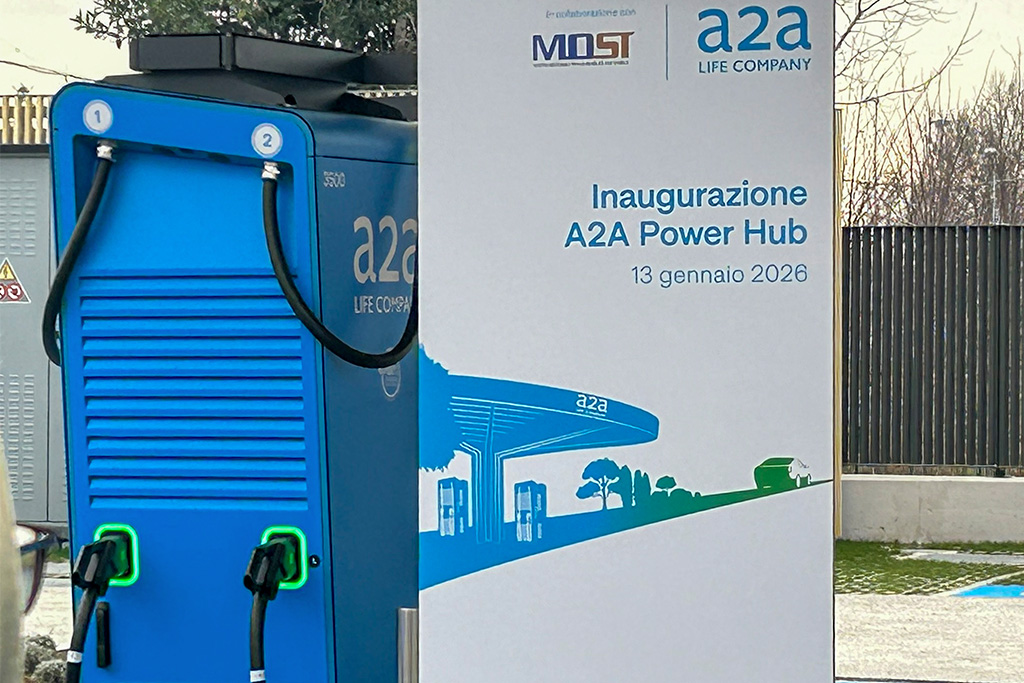
The complete site combines five ultrafast DC chargers rated up to 300 kW, one AC charger, rooftop solar PV, integrated battery energy storage, and a central EMS that continuously coordinates energy flows across the entire installation.
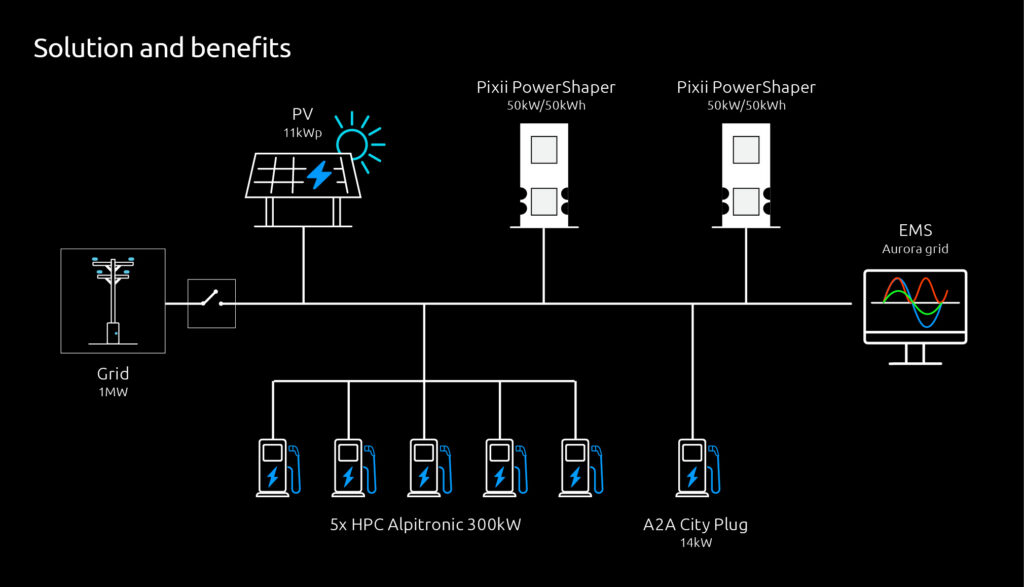
The battery system acts as a local energy buffer, helping smooth out peak demand and support stable charging performance when several vehicles charge at the same time. The EMS continuously manages the interaction between the public grid, solar production, battery storage, and charging demand to optimize overall site efficiency.
The modular architecture also makes the solution easier to scale over time as charging demand grows.
In addition to the energy infrastructure itself, the site includes several operational and customer-focused features such as POS payment terminals, digital information displays, CCTV monitoring, occupancy monitoring systems, and real-time support services.
The benefits
By integrating battery energy storage directly into the charging infrastructure, the Monza Power Hub is able to support reliable ultrafast charging while reducing the impact on the local grid.
The local battery storage helps stabilize charging performance during periods of high simultaneous demand and reduces sudden power peaks from the grid. Combined with the EMS, the solution also improves the use of locally generated solar energy and helps optimize overall energy usage across the site.
The modular design gives A2A a flexible and future-ready platform that can be expanded as charging demand increases over time.
For EV drivers, the result is a modern charging experience combining high charging performance with simple payment solutions, digital guidance, and improved site accessibility.
The result
The A2A Power Hub in Monza demonstrates how battery energy storage can help enable reliable and scalable ultrafast EV charging in urban environments.
By combining high-power charging, solar energy, battery storage, and intelligent energy management, the site delivers up to 12 simultaneous charging sessions while helping reduce grid impact and improve operational efficiency. The project serves as a strong example of how future EV charging hubs can evolve into smarter and more flexible energy systems – where charging infrastructure becomes an integrated part of the broader energy ecosystem.
Key takeaway
The A2A Power Hub demonstrates how a Battery Energy Storage System (BESS) can enable reliable ultrafast EV charging by combining battery storage, solar PV, and intelligent energy management to reduce grid demand while improving charging performance.
Frequently asked questions (FAQ)
How does battery energy storage improve EV charging?
Battery energy storage reduces peak power demand from the electricity grid, supports simultaneous fast charging sessions, and improves the use of locally generated solar energy.
Why use battery storage at EV charging hubs?
Battery storage helps charging operators install higher charging capacity where grid connections are limited or expensive while improving energy efficiency.
Which battery energy storage system was used?
The project uses two Pixii PowerShaper battery energy storage systems integrated with the site’s Energy Management System.
