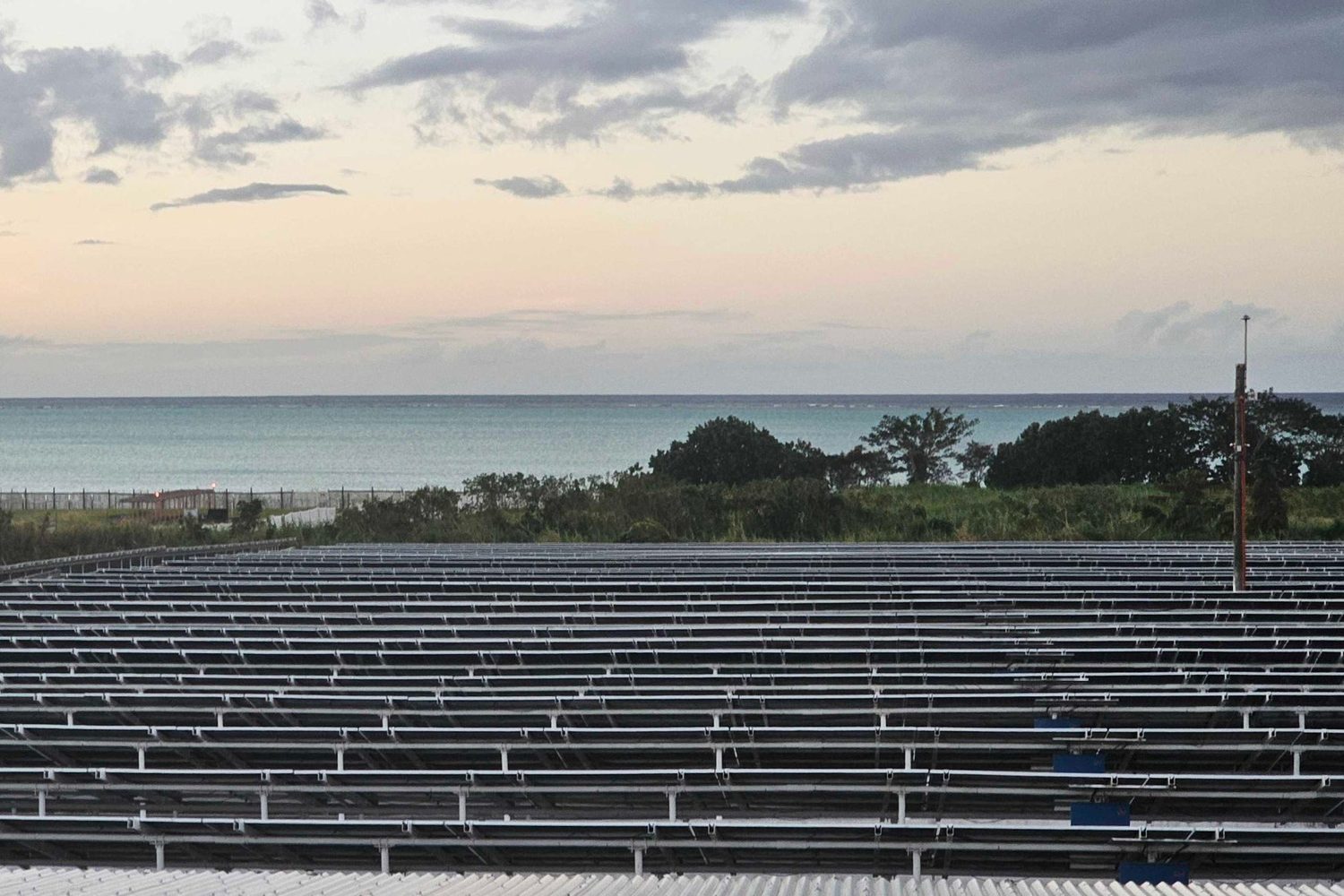
Harelec has installed a 2.25 MW / 4.7 MWh Pixii battery energy storage system (BESS) at a grid-connected solar farm in Samoa. The system keeps the farm within its 5.0 MW grid limit, smooths sudden swings in solar output during cloud events and provides voltage support to the local network.
The installation combines Pixii’s PowerNode architecture with the second-generation Pixii Software Platform and Pixii Energy Architect (EMS) for energy management, monitoring and control. It is the first customer-site deployment of the new Pixii Software Platform, ahead of its wider launch.
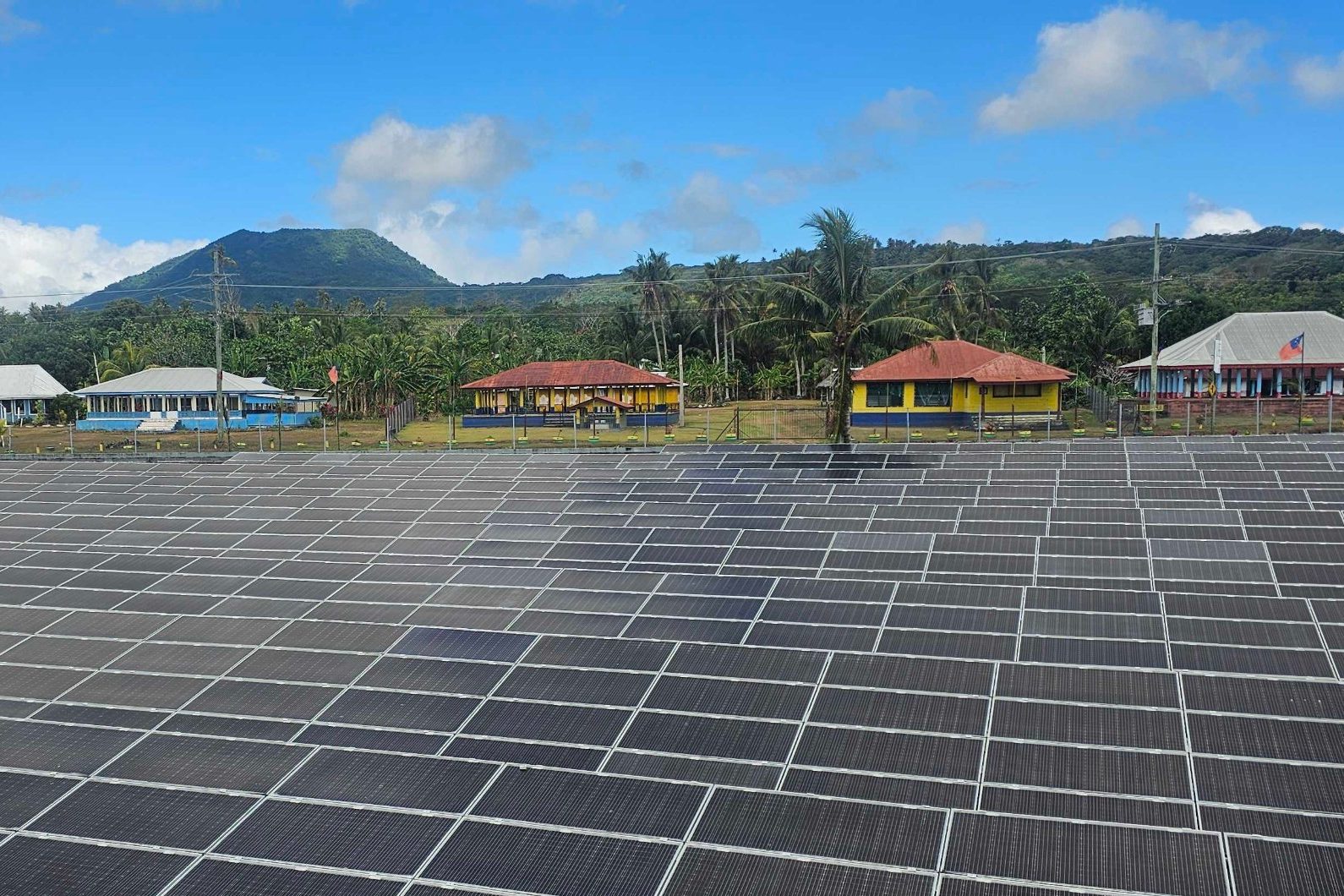
| Project partner | Harelec |
| Location | Near Faleolo International Airport, Samoa |
| Industry | Utility-scale solar power |
| Application | Export limiting, cloud-event smoothing and voltage support |
| Pixii products | PowerNode architecture, Pixii Software Platform and Pixii Energy Architect (EMS) |
| Value proposition | Use more of a 6.0 MW solar farm’s output within a 5.0 MW grid limit, while supporting a small island network |
| Rated energy capacity | 4.7 MWh |
| Rated converter power | 2.25 MW |
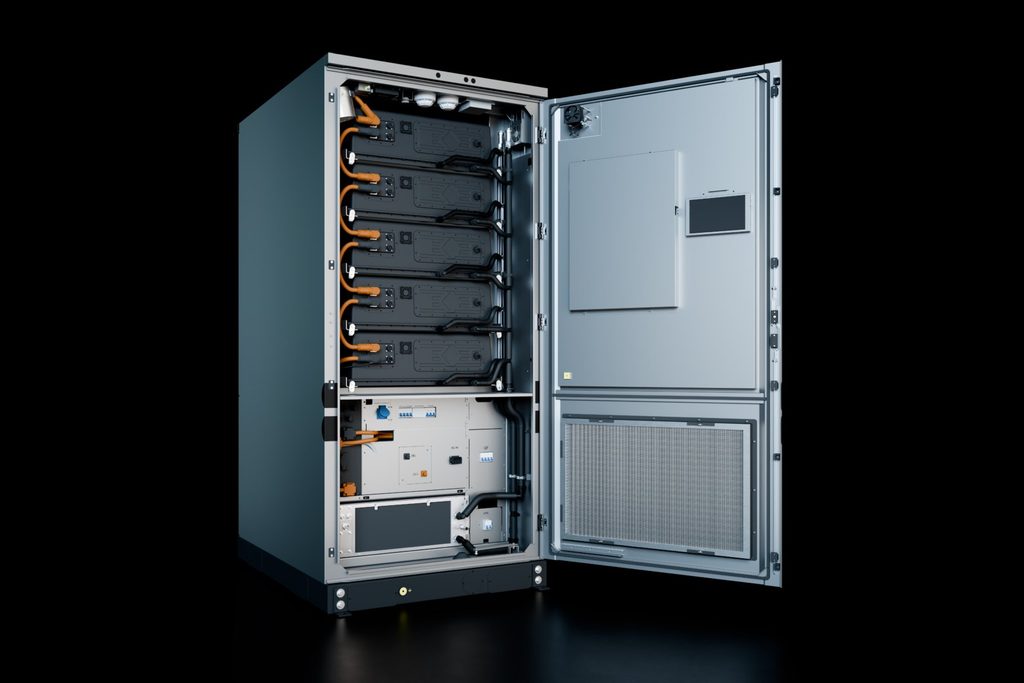
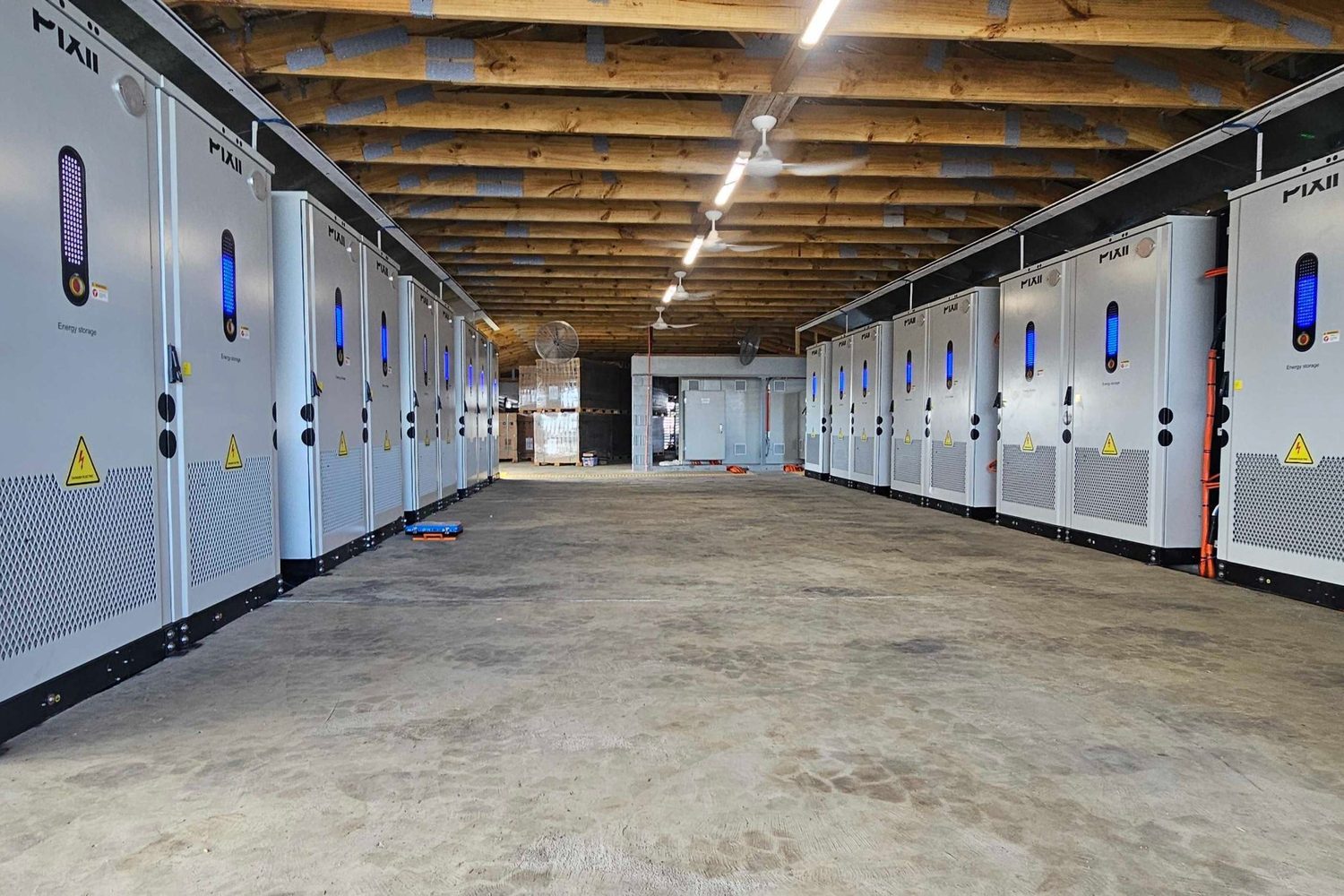
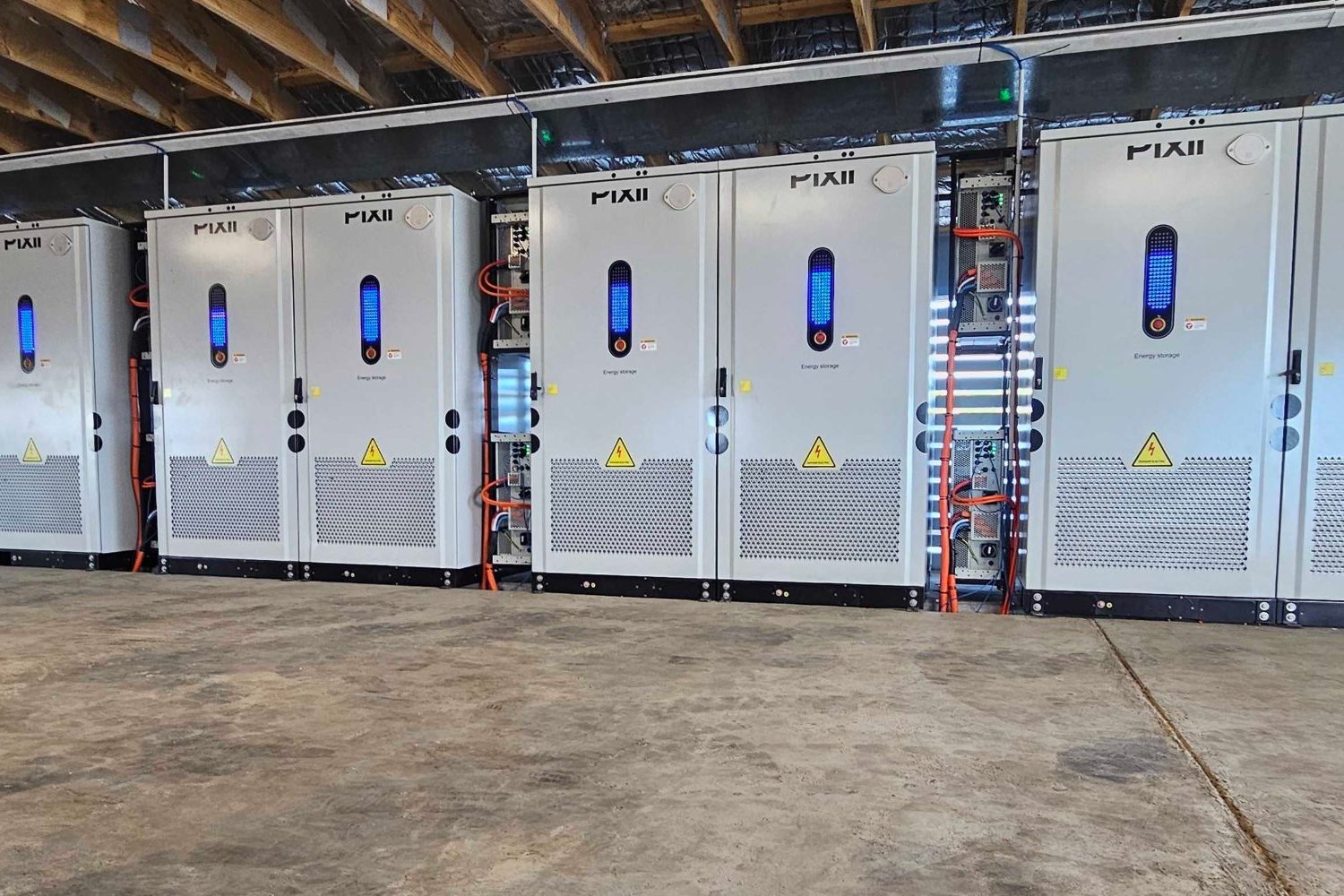
| Configuration | 18 PowerNode PBC 261 battery cabinets and 18 IP-rated bi-directional converters |
| Solar farm capacity | 6.0 MW |
| Grid export limit | 5.0 MW |
| Voltage support | Volt-VAr droop control |
| Control platform | Pixii Software Platform run from an industrial PC |
Solar power in the South Pacific
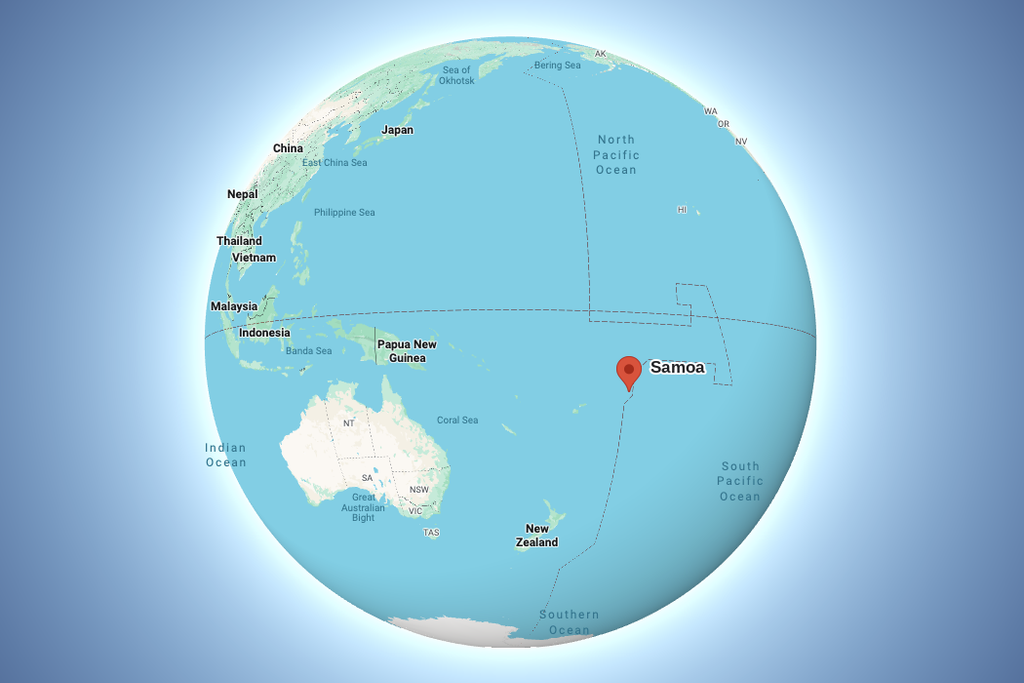
Samoa is a small island country in the central South Pacific, roughly halfway between New Zealand and Hawaii. Its remote location makes logistics, on-site expertise and access to specialist technical support more demanding, particularly for large and technically complex energy installations.
Solar power helps island communities make greater use of local renewable energy and reduce their dependence on imported fuel. On a small island grid, a 6.0 MW solar farm is a large share of total supply. Sudden changes in its output must be carefully managed so the network stays stable and reliable.
The challenge
Solar generation varies throughout the day and can change quickly as weather conditions shift. When production exceeds the amount permitted by the grid, some of the available solar energy may have to be curtailed.
The site faced three related challenges:
- Export limit: the solar farm can generate up to 6.0 MW, but local grid restrictions limit its output to 5.0 MW. Whenever production exceeds the limit, the excess solar energy has to be curtailed.
- Cloud events: passing clouds can cut solar output by several megawatts within minutes, then let it spike back just as quickly. On a small island network, steep swings like these leave other generators little time to respond to the change in supply.
- Voltage: changes in power flow from a large solar farm affect voltage on the local network, which must be held within acceptable limits.
The solution also had to coordinate 18 battery cabinets and 18 converters through one central platform. Given Samoa’s remote location, it was especially important to be able to monitor the whole installation and provide specialist technical support remotely.
The solution
Harelec and Pixii deployed a higher-voltage PowerNode battery energy storage system comprising 18 PowerNode PBC 261 battery cabinets with a combined rated energy capacity of 4.7 MWh, and 18 IP-rated bi-directional converters with a combined rated power of 2.25 MW. Pixii Energy Architect (EMS) uses the system for three functions:
Export limiting
Export limiting, also known as solar production peak shaving, uses the batteries to store energy that would otherwise be curtailed as solar production approaches the 5.0 MW grid limit. That energy is discharged later, which flattens the site’s power curve and reduces curtailment.
Cloud-event smoothing
Pixii Energy Architect (EMS) measures site power in real time. When cloud causes solar output to drop sharply, the batteries discharge to fill the gap. When output spikes back, they charge to absorb the surge. Instead of a sudden step, the network sees a gradual change in supply.
The aim is to support network reliability and give the local network operators more time to match base-load generation to demand on the island.
Voltage support
The bi-directional converters supply or absorb reactive power (VArs) using volt-VAr droop control, adjusting automatically as network voltage changes. Because reactive power does not draw on stored energy, voltage support is available 24 hours a day, including at night when the solar farm is not generating.
About Pixii PowerNode
PowerNode is Pixii’s modular energy storage system for applications where storage becomes part of the energy system itself, not a single-purpose add-on.
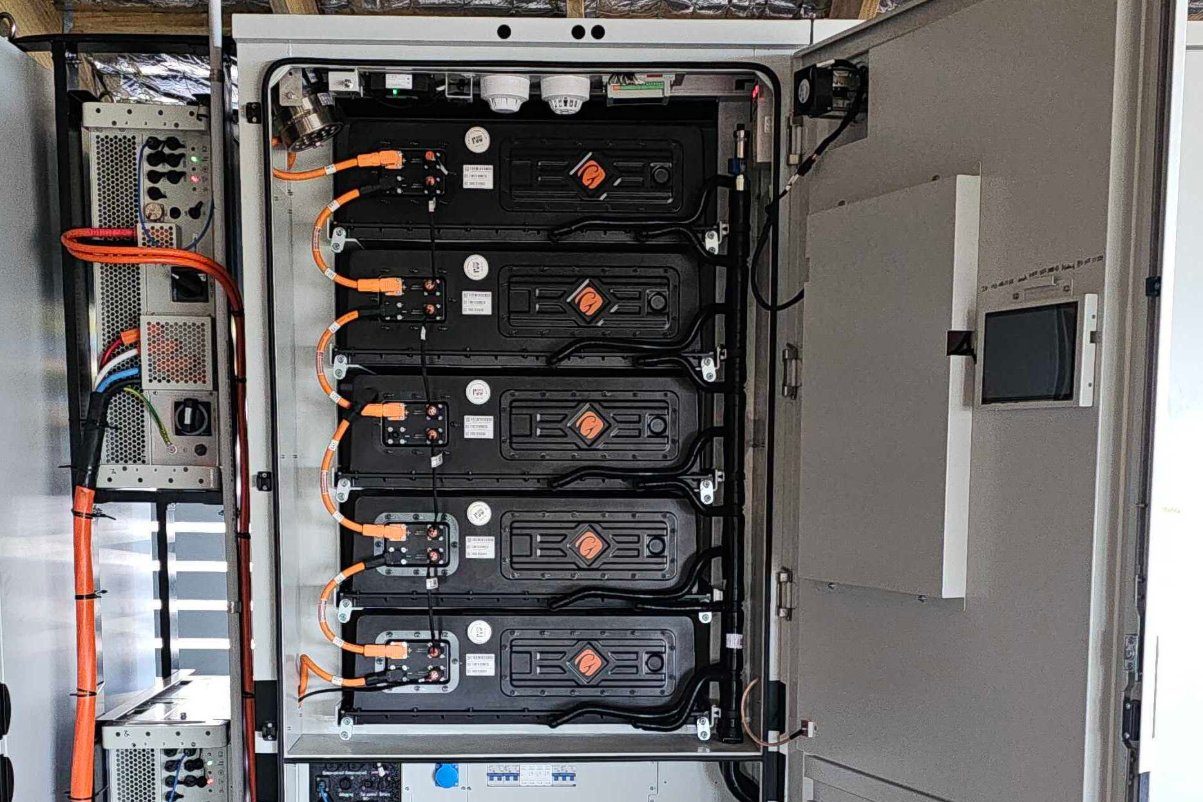
Power and energy scale independently, from medium installations to multi-MW and multi-MWh systems, so each system can be matched to its application without oversizing. Factory-tested building blocks reduce on-site work, provide built-in redundancy and allow systems to grow over time. The range includes the PowerNode PBC 261, a liquid-cooled, IP55-rated outdoor battery cabinet with 261 kWh of usable energy.
In Samoa, 18 PBC 261 cabinets make up the system’s 4.7 MWh of storage.
Control and monitoring
The Pixii Software Platform and Pixii Energy Architect (EMS) together provide energy management, monitoring and control. Unlike a standard PowerNode configuration, there is no dedicated PowerNode control cabinet. Instead, the Pixii Software Platform runs on an industrial PC and coordinates all 18 battery cabinets and converters from one central platform.
The Pixii Software Platform handles system-level control, monitoring and secure remote access across the hardware, while Pixii Energy Architect (EMS) runs the site-level functions: export limiting, cloud-event smoothing and volt-VAr voltage support.
The technology in action
The site data below shows the system responding to cloud events. At 14:41 local time, solar output fell from about 5.0 MW to 2.0 MW in two minutes. The batteries discharged up to 2.2 MW to fill the gap, so the site’s output eased down to 2.8 MW over almost ten minutes instead of dropping at once.
From 15:00, solar output swung repeatedly between about 2.8 MW and 5.0 MW as cloud passed. The batteries alternated between charging and discharging at up to about 1 MW, keeping the site’s output between about 3.5 MW and 4.1 MW.
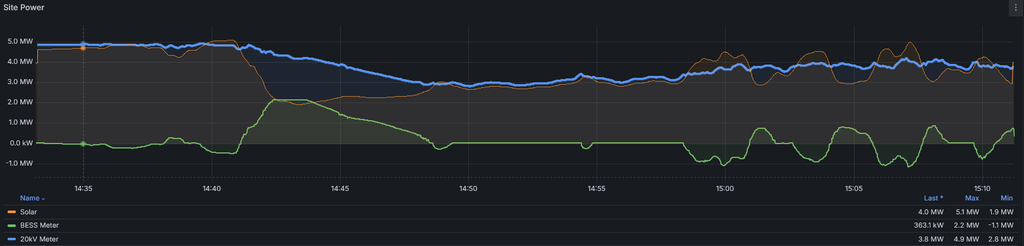
Orange: solar output. Green: BESS power (positive = discharging, negative = charging). Blue: site output at the 20 kV meter.
The benefits
The system keeps the solar farm within its 5.0 MW grid limit while reducing curtailment, so more of the available solar energy is put to use. During cloud events, it turns steep drops and spikes into gradual changes, giving network operators more time to balance generation and demand. Volt-VAr control supports network voltage day and night.
Central control, monitoring and secure remote access across the whole system make it practical to operate and support an installation of this size in a remote location.
“With 4.7 MWh of battery storage, we can manage production peaks instead of simply curtailing the solar output. Delivering a system of this scale in Samoa required close cooperation between Harelec and Pixii, and it gives us a model for similar projects across the Pacific Islands.”
Jamie Harrison, Managing Director, Harelec
The result
The 2.25 MW / 4.7 MWh battery energy storage system was commissioned and is now operating.
The project shows how PowerNode, the Pixii Software Platform and Pixii Energy Architect (EMS) can manage a large-scale solar and battery installation from one central platform. For Harelec, it extends its utility-scale solar experience in Samoa and provides a foundation for similar energy storage projects across the South Pacific.
About Harelec
Harelec is an Australian electrical and solar company with more than 40 years of industry experience. Based in Port Macquarie, New South Wales, the company designs, constructs and manages solar installations across Australia and the Pacific Islands.
Harelec has an established history in Samoa, including the delivery of a 4.6 MW grid-connected solar power plant near Faleolo International Airport. The plant has been expanded several times in recent years and currently has a capacity of 6.0 MW. This BESS project builds on Harelec’s experience with utility-scale solar generation in the region.
Key takeaway
The Samoa project shows how a 2.25 MW / 4.7 MWh battery energy storage system keeps a grid-connected solar farm within its export limit, smooths cloud-driven swings in output and supports network voltage around the clock.
Frequently asked questions (FAQ)
Why was battery energy storage added to the solar farm?
The solar farm can generate up to 6.0 MW, but local grid restrictions limit its output to 5.0 MW. Battery storage keeps output within that limit and reduces curtailment. It also smooths sudden changes in solar output during cloud events and supports network voltage.
How large is the battery energy storage system?
It has a rated energy capacity of 4.7 MWh and a rated converter power of 2.25 MW. It comprises 18 PowerNode PBC 261 battery cabinets and 18 IP-rated bi-directional converters.
What is solar production peak shaving?
Solar production peak shaving uses battery storage to manage peaks in a solar farm’s output. Energy is stored when production approaches the permitted limit and discharged later, creating a flatter, more controlled power curve.
How does the system smooth cloud events?
Pixii Energy Architect (EMS) measures site power in real time. When cloud causes solar output to drop, the batteries discharge to fill the gap; when output spikes, they charge to absorb it. This turns sudden steps into gradual changes, giving network operators time to adjust other generation.
How does the system support network voltage?
The bi-directional converters supply or absorb reactive power (VArs) using volt-VAr droop control, responding automatically to changes in network voltage. Because this does not use stored energy, it is available 24/7, including at night.
How is a system this large supported in a remote location like Samoa?
The Pixii Software Platform provides central monitoring and secure remote access to the whole installation, so Pixii and Harelec can support the system remotely, reducing the need for specialists to travel to site.
