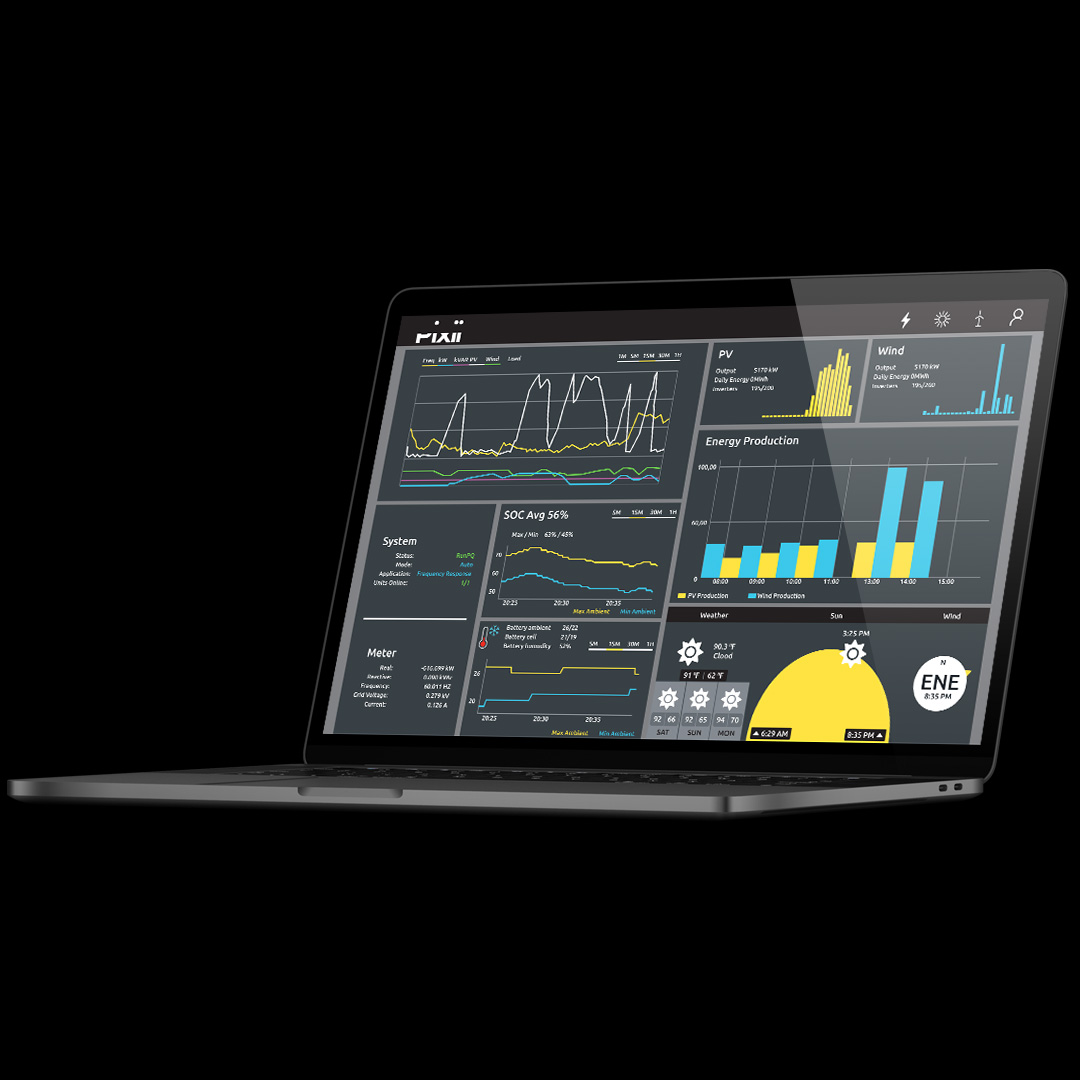
Fully autonomous control
The Pixii Energy Architect offers fully autonomous control and coordination between power sources and loads, ensuring efficient energy distribution. With its capability to monitor system health and load in real-time, the EMS improves reliability and performance of your BESS.
As energy systems become more complex, managing power efficiently is more critical than ever. The Pixii Energy Architect helps BESS owners and operators maximize profitability while ensuring system stability resilience and longevity. Pixii Energy Architect ensures the best possible economic and operational outcome by prioritizing, balancing, and orchestrating various battery services.

Real-time
decision-making
Continuously monitors energy assets such as PV, grid, batteries, thermal plants, fuel cells and loads, along with grid conditions, electricity prices, and energy demand to dynamically adjust strategies for optimal performance.
Control and optimize the energy flow
The Energy Architect is controlling when to store, discharge, or trade energy based on real-time data and forecasts. Monitoring system health and action response to unforeseen abnormal events.

Coordination of multiple services
Balances primary battery applications with income generating services to enhance reliability, improve operational efficiency and maximize financial returns.
Maximizing profitability for on-grid BESS operation
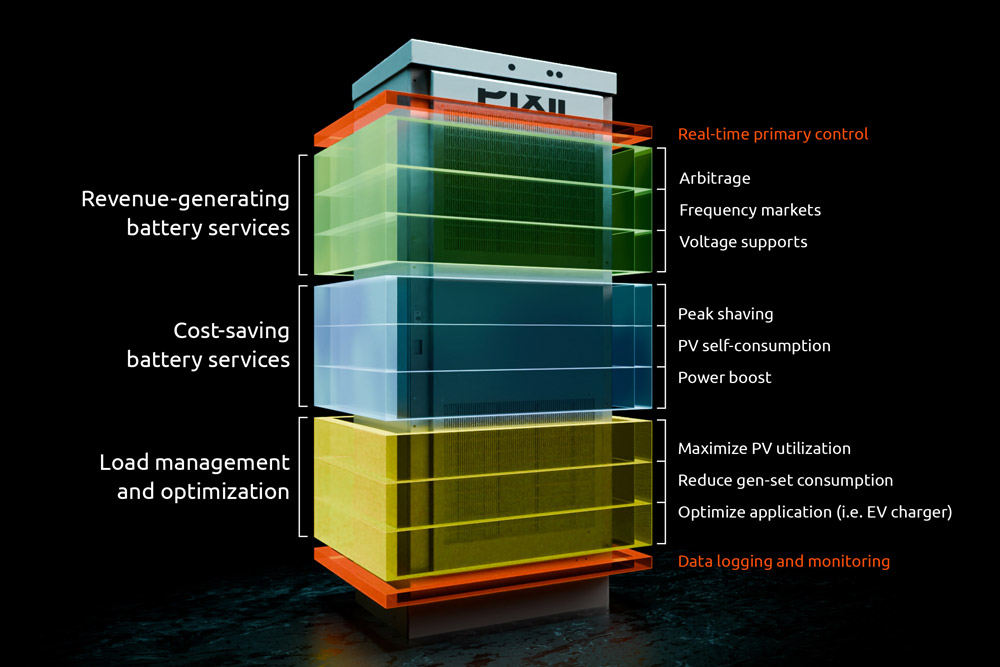
In on-grid BESS environments, the Pixii Energy Architect maximizes value by coordinating cost-saving services like peak shaving and PV self-consumption with income-generating ancillary services.The EMS optimizes battery charging and discharging based on energy prices, demand, and grid conditions while ensuring participation in frequency markets, balancing markets, and other grid services.
By stacking and prioritizing different battery functions and services, the Pixii Energy Architect prevents conflicts, protects battery health, and ensures continuous optimization.
Ancillary services and market participation
- Monetize your BESS with income-generating services like frequency regulation, balancing power, arbitrage and voltage support.
- Connect to Virtual Power Plants (VPPs) through aggregators or directly trade in wholesale electricity markets for maximum financial returns.
Empowering charge point operators to scale, save, and earn
As EV adoption accelerates, Charge Point Operators (CPOs) are under pressure to scale quickly – yet they often face grid constraints, peak demand issues, and high cost of upgrading existing infrastructure. The Pixii Energy Architect EMS is designed to tackle these issues by ensuring seamless power management, reducing operational costs, and enabling future scalability.
Optimized energy distribution and load management
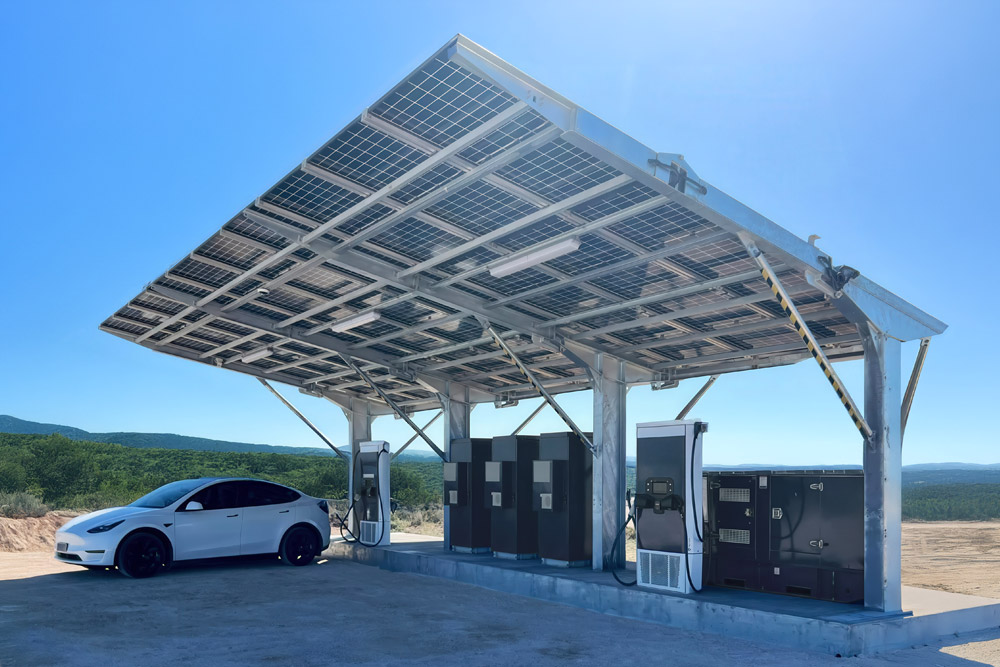
The Pixii Energy Architect provides autonomous control over power sources and EV chargers, ensuring efficient energy distribution. By continuously monitoring system health and real-time loads, it improves the reliability and performance of charging sites. Intelligent battery buffering, SoC regulation, and solar control allow charging stations to operate smoothly, even in weak grid conditions.
Cost savings and sustainability
By optimizing power usage, reducing peak demand, and leveraging renewable energy, the Pixii Energy Architect helps lower electricity costs and improve overall site efficiency and TCO.
Enabling new revenue streams
Beyond optimizing site performance, the EMS opens the door to income-generating battery services, such as participation in frequency markets, voltage support, and other grid services. By stacking these capabilities, BESS owners can turn their energy storage assets into flexible revenue sources while supporting overall grid stability.
Autonomous energy management for off-grid reliability
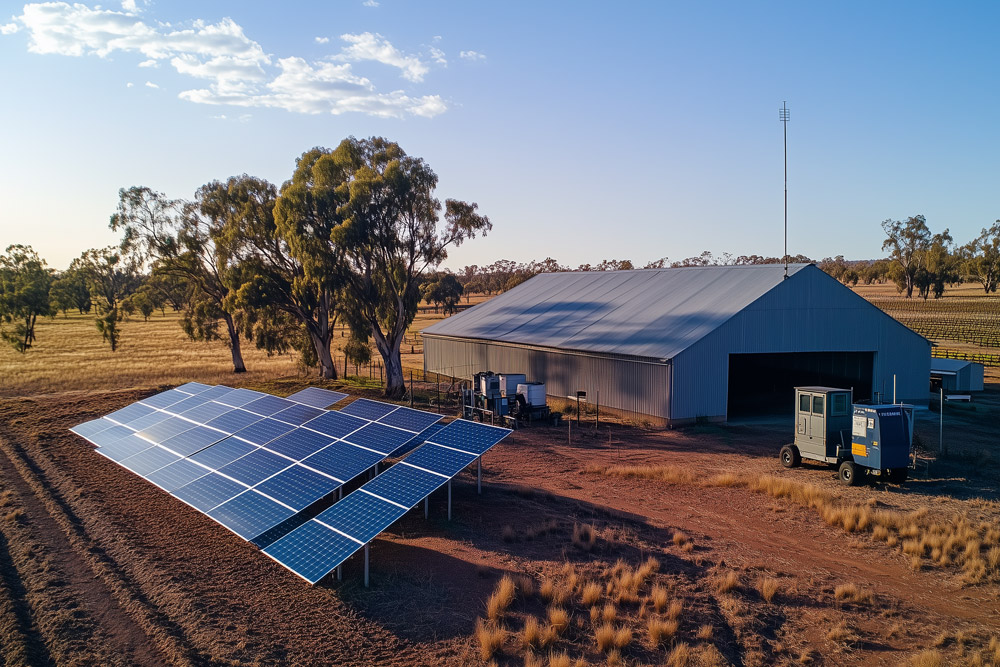
In off-grid environments, maintaining reliable power is challenging due to fluctuating loads and multiple energy sources like solar, batteries, and diesel generators. Pixii Energy Architect ensures consistent performance through autonomous control, intelligently coordinating these sources to deliver stable, uninterrupted power – even in the most remote conditions.
By prioritizing solar power, optimizing battery usage, and autonomously controlling the generator to run only when necessary, it reduces fuel costs and maintenance. The EMS improves overall system efficiency, and supports sustainability by maximizing the use of clean solar energy and minimizing diesel consumption and emissions.
Smart load and energy management
- Prolongs lifespan of battery and generator.
- Reduces fuel consumption by managing generator runtime reducing wear and tear.
- Ensures uninterrupted power by prioritizing critical loads and shedding non-essential ones when energy is low.
| With Pixii Energy Architect EMS | Without EMS |
| Boost available power | Uncontrolled loads may trip breakers |
| Optimized charging based on price and demand | Uncontrolled charging/discharging |
| Maximized battery lifespan | Battery wear and tear |
| Store and use solar power efficiently | Wasted solar energy |
| Stacked revenue streams from multiple services | Limited participation in electricity markets |
| Low fuel cost and optimized use of generator | High fuel costs and wear and tear of generator |