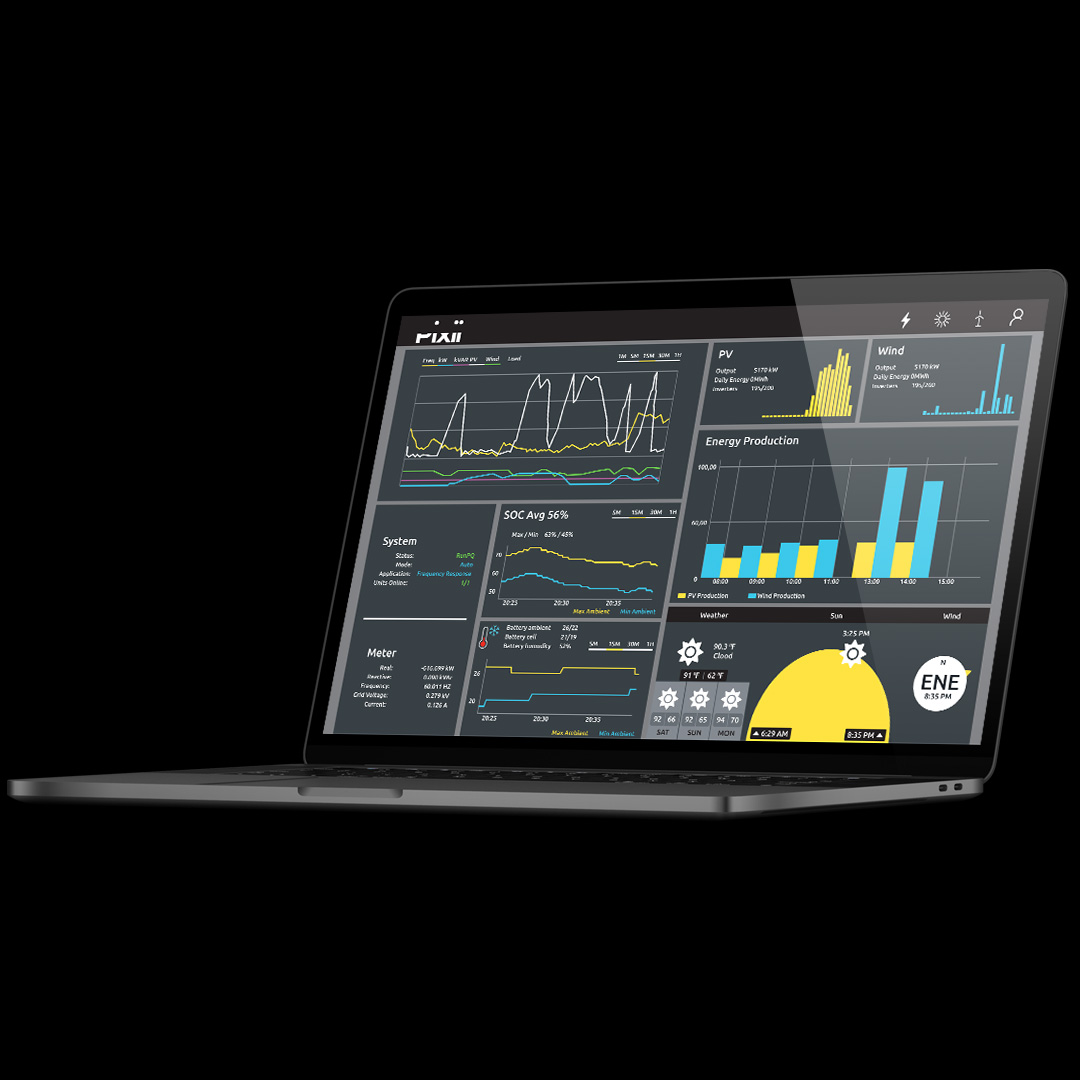
Full control with the Energy Architect (EMS)
The Energy Managemenet System (EMS) is optimizing power infrastructure. Turning your battery energy storage into a profitable and flexible energy asset.
Cybersecure foundation
Pixii Energy Architect is built on a secure Linux-based platform with advanced communication protocols and strong cybersecurity measures. It ensures safe remote access, protects data integrity, and guarantees resilient operation, making it a trusted core for both on-grid and off-grid energy systems.
Autonomous control
The EMS delivers fully autonomous coordination of power sources and loads. By monitoring system health, grid conditions, and energy flows in real time, it ensures reliable and efficient performance under all operating conditions.
On-grid optimisation
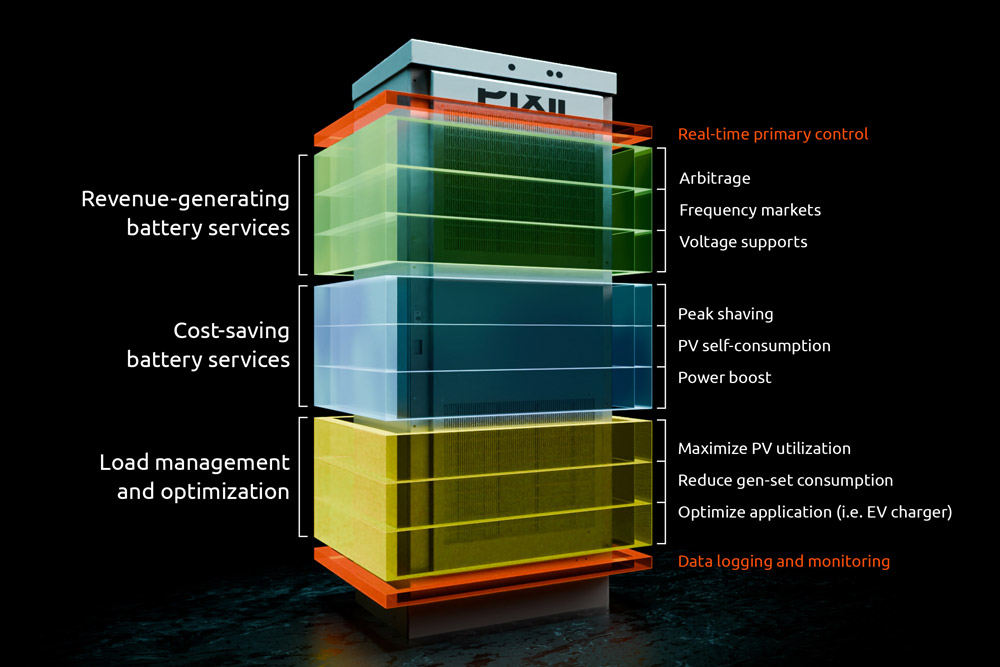
Pixii Energy Architect maximizes the value of energy storage by combining cost-saving services such as peak shaving, PV self-consumption, and load shifting with revenue-generating applications like frequency regulation, voltage support, and arbitrage.
It dynamically adjusts charging and discharging based on forecasts, demand, and market signals to secure the best financial and operational outcome.
Off-grid resilience
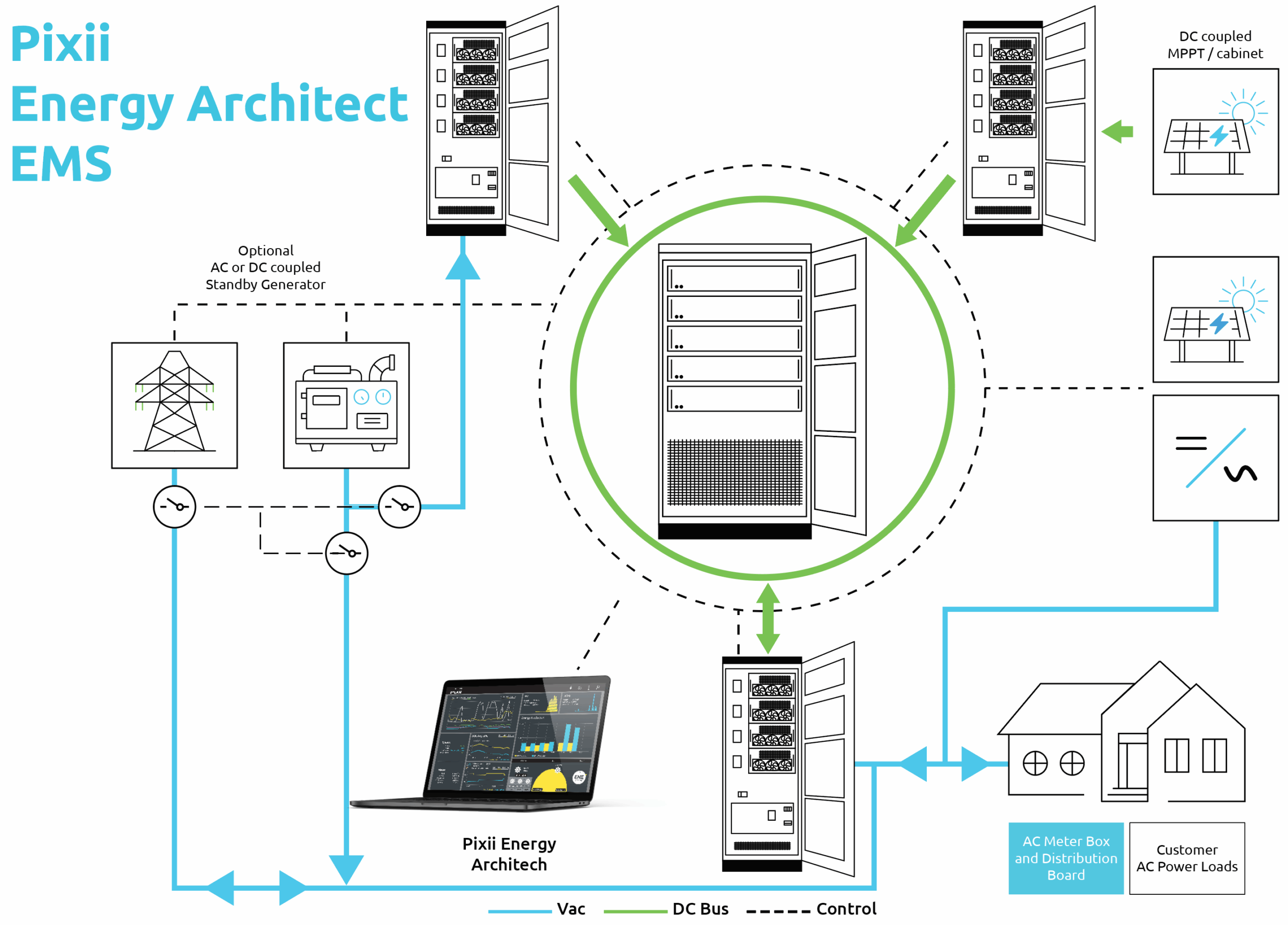
For off-grid and weak-grid environments, the system intelligently manages batteries, renewables, and gensets. By prioritizing solar and battery use and running generators only when required, it reduces fuel consumption, extends equipment lifetime, and ensures uninterrupted supply to both critical and non-critical loads.
Coordinated services and revenue
The EMS balances primary battery applications with income-generating services to enhance reliability, prevent conflicts, and protect battery health. By stacking services and enabling participation in energy markets or integration with Virtual Power Plants, Pixii Energy Architect turns energy storage into a secure, efficient, and future-proof asset.

Continuously monitors all energy sources, grid conditions, and system demand, adjusting control strategies in real time to maintain optimal performance.

Manages when to store or discharge energy based on real-time system data, while continuously monitoring system health and reacting to unexpected events to maintain safe and reliable operation.
- Advanced cybersecurity
- Autonomous operation
- Optimized efficiency
- Revenue generation
- Off-grid resilience
- Future-proof scalability
- Peak shaving
- PV self-consumption
- Frequency & voltage support
- Arbitrage