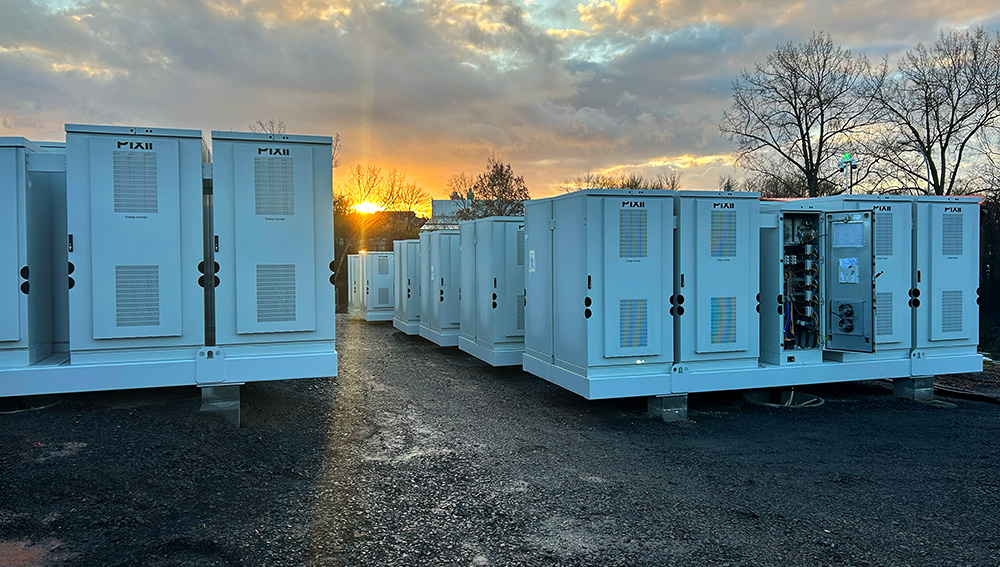
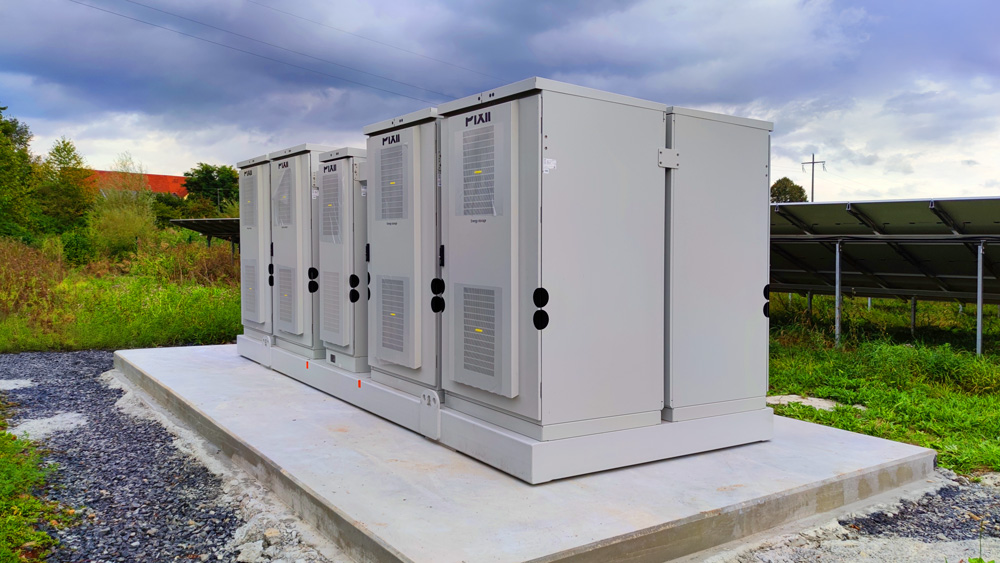
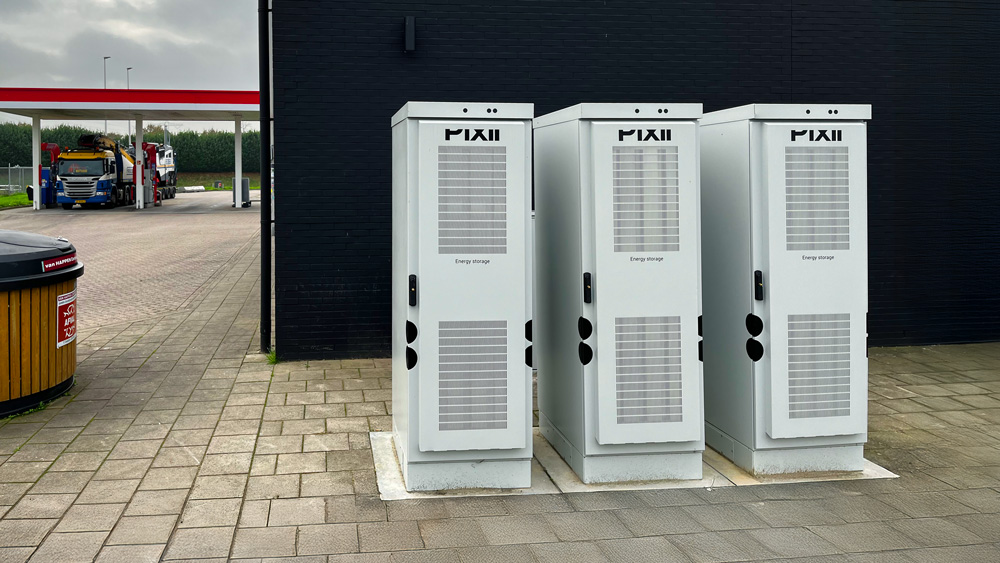
The question is no longer whether to invest in energy storage. Across Europe and the US, the real challenge is how to design energy systems that can grow, adapt, and operate reliably in a world of constrained grids, rising loads, and accelerating electrification.
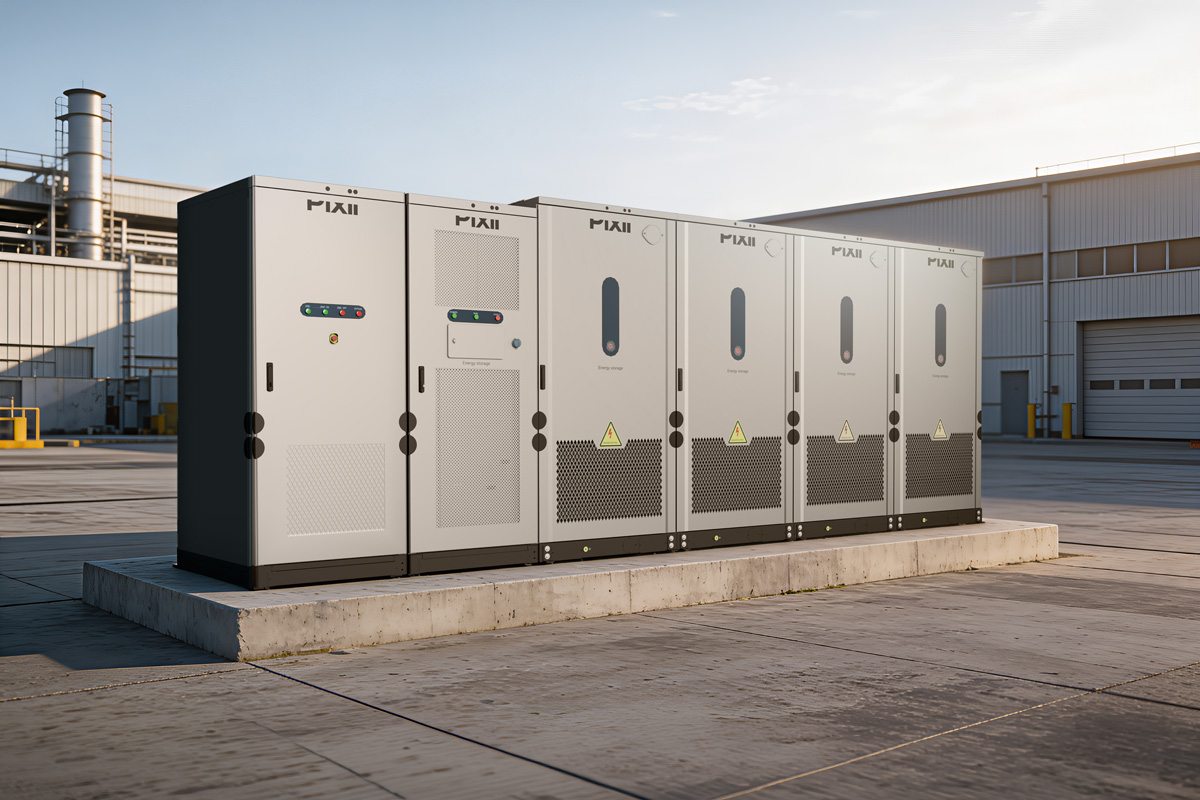
Grid capacity is often the limiting factor. New generation, new consumption and new business models are ready to move forward, but the grid is not always ready to follow. In this context, energy storage must do more than optimise energy costs. It must become an integral part of the energy system itself.
PowerNode is Pixii’s answer to this reality.
From energy storage to energy systems
Pixii has always taken a modular, distributed approach to energy storage. Instead of large, centralised battery blocks, Pixii systems are designed to scale step by step, adapt over time and operate close to where energy is produced and consumed.
PowerNode builds directly on this philosophy, extending it into applications where energy storage moves beyond site-level optimisation and becomes a system-level asset. It is designed for projects where storage must support multiple roles in parallel, interact actively with the grid and remain flexible as requirements evolve.
Rather than treating energy storage as a single-purpose solution, PowerNode treats it as energy infrastructure.
Freedom from grid limits
At the core of PowerNode is a DC-coupled, modular system. Instead of forcing projects to conform to grid connection limits, PowerNode allows customers to design the energy system they actually need and then control how and when it interacts with the grid.
This freedom is enabled by a DC microgrid architecture at the core of the system.
Modern energy assets – batteries, solar PV, EV chargers and many industrial loads – are inherently DC-based. Instead of forcing these assets to interact indirectly through the AC grid, PowerNode allows them to share energy directly within the system.
This shifts the role of the grid from being the centre of the system to becoming one of several energy connections.
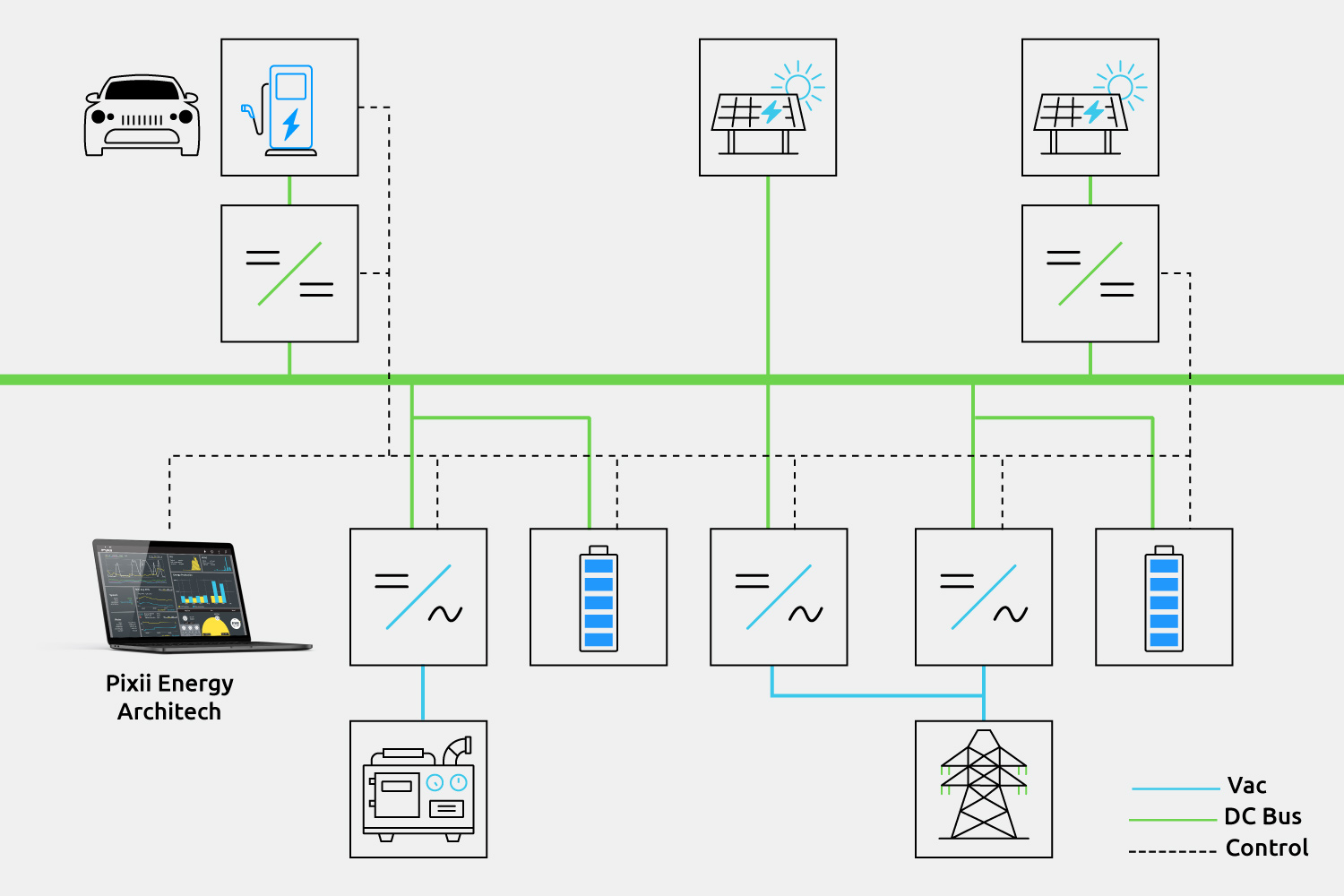
The result is greater architectural freedom. System sizing can be decoupled from grid constraints. Solar, batteries, and DC loads can hence be integrated more efficiently, and power and energy can scale independently. Fewer conversion stages improve efficiency, while modular building blocks make it easier to expand or reconfigure the system over time.
For customers, this translates into greater design flexibility. PowerNode enables energy systems to grow and adapt without being locked into today’s grid limitations.
One platform, many applications
PowerNode is not built for a single use case. It is designed as a flexible system platform that supports multiple applications in parallel.
The same PowerNode system can buffer the grid connection and smooth peak demand from heavy electrical loads with high peak-to-average profiles, allowing stable operation within the existing grid capacity and reducing the need for costly or time-consuming upgrades. At the same time, it can support EV charging infrastructure, integrate renewable generation, and serve modern DC-heavy loads within the same system architecture.
Because these roles are actively managed within a single system, PowerNode can also operate as part of a microgrid while participating in flexibility or grid service markets. These functions are coordinated through Pixii’s Energy Architect EMS, enabling customers to extract greater value from a single installation
Designed for operation, not standby
PowerNode is not positioned as a traditional backup system. Its primary purpose is not to sit idle and wait for rare outages, but to operate continuously as part of the energy system.
When required, PowerNode can support off-grid or islanded operation. Its main value, however, lies in actively managing power flows, supporting loads, and maintaining stability under everyday conditions. PowerNode is about utilisation, control, and system performance – not just emergency power.
Autonomous control with Pixii Energy Architect
Managing a complex energy system requires more than hardware. PowerNode is controlled by Pixii Energy Architect, Pixii’s autonomous energy management system (EMS).

The EMS controls and coordinates energy sources, storage and loads locally, optimising power flows in real time. It responds instantly to changes in demand or grid conditions and continues operating even if external connectivity is lost.
This local intelligence ensures predictable behaviour, fast response and stable operation in both strong and weak grid environments.
For our customers it means less manual intervention and greater confidence in daily operation.
Cybersecurity built for critical infrastructure
As energy storage becomes part of critical infrastructure, cyber-security is no longer a secondary concern. PowerNode is designed as a cyber-physical system, where electrical performance and digital security are treated as one.
Security is built into the architecture. Pixii applies a multi-layered security approach including secure communications protocols, controlled system access, detailed logging and continuous monitoring. Local autonomy reduces dependency on external connectivity, limiting exposure and ensuring stable operation even under degraded network conditions.
PowerNode is designed and controlled in Europe. System architecture, control logic, EMS software, and security governance are developed and managed within European regulatory frameworks. This includes alignment with GDPR and European cybersecurity directives, ensuring strict standards for data protection and system access.
Core system intelligence and control hardware are developed in Europe. This means software ownership, system updates, access control policies, and data handling are governed under European law and jurisdiction.
For operators of critical infrastructure, knowing where control resides and which legal framework applies reduces uncertainty and ensures predictable long-term governance. European design and governance provide regulatory alignment, transparency, and reduced exposure to external political or regulatory risk.
Resilience today is not only electrical. It is digital. PowerNode addresses both..
Participation in various electricity markets
PowerNode is designed to support participation in a wide range of electricity markets and grid service schemes, depending on local regulation and market structure. These may include capacity services, congestion management, peak shaving, power boost, frequency-related services and local flexibility markets.
Market participation is coordinated by Pixii’s Energy Architect EMS alongside on-site prioritised tasks. This ensures that grid services never compromise system stability or critical loads. Operational requirements always take precedence, while available capacity can be allocated dynamically to market-based services when conditions allow.
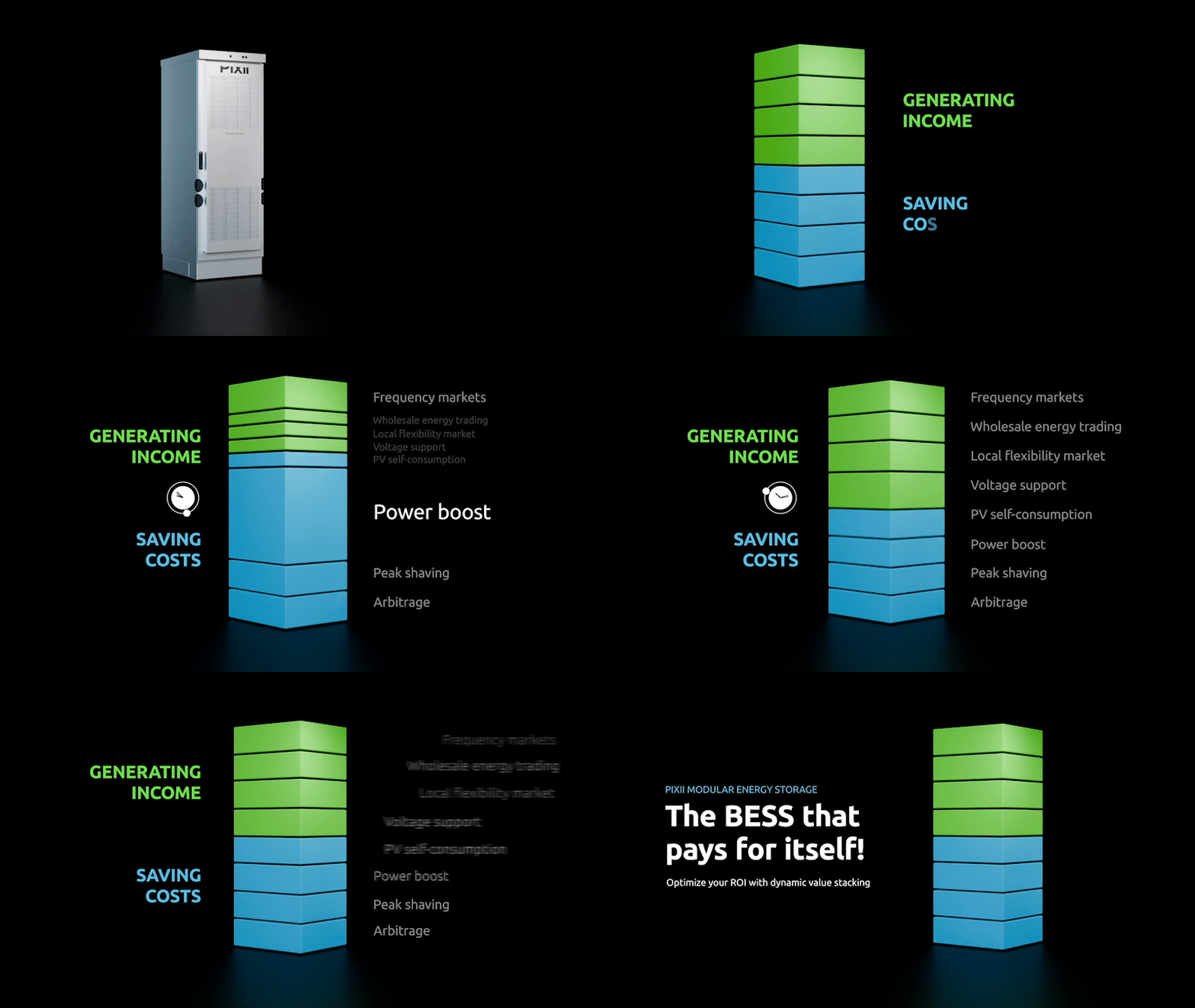
This integrated approach enables customers to combine operational value with additional revenue opportunities from the same system, without adding complexity or operational risk.
Modular by design, scalable by nature
PowerNode follows Pixii’s modular design principles throughout. Power and energy scale independently, from medium installations to multi-MW and multi-MWh systems. This makes it possible to match the system precisely to the application – without oversizing or unnecessary cost.
This modularity provides inherent redundancy and high availability, simplifies maintenance and enables staged expansion. Systems can start at one size and grow over time without redesigning the architecture or disrupting ongoing operation. Factory-tested modules reduce on-site work and contribute to lower lifetime cost and operational risk.
Seamless transfer of power and built-in resilience
PowerNode is designed to ensure seamless transfer of power across grid-connected, islanded, and off-grid operating modes. Business-critical infrastructure and loads do not tolerate interrupted or unstable power. Rather than relying on separate systems for daily operation and backup, PowerNode integrates resilience directly into the energy system, maintaining stable supply to critical loads during grid disturbances, outages, or planned disconnections. The result is predictable performance, fast response, and a resilient power architecture suited for continuous operation in demanding environments.
Complementary to Pixii’s portfolio
PowerNode does not replace Pixii’s existing solutions. It complements them.
While Pixii’s PowerShaper family is optimised for distributed, site-level energy optimisation, PowerNode addresses applications where energy storage must operate at system level, support higher power and enable multiple applications in parallel. Both product families share the same foundation: modularity, distributed intelligence and autonomous control, applied to different roles within the energy system.
Built for the next phase of the energy transition
Energy systems are becoming more distributed, more digital – and increasingly DC-based. Batteries, solar generation, electric vehicles, data centers and industrial processes are driving a fundamental shift in how power is produced, stored and delivered.
PowerNode is designed for this next phase of electrification, where energy systems must support high-power DC assets, operate efficiently within constrained grids and remain flexible as requirements evolve.
PowerNode is not just an energy storage system.
It is a platform for how modern energy systems are built and operated.
Discover how PowerNode fits into your energy strategy.