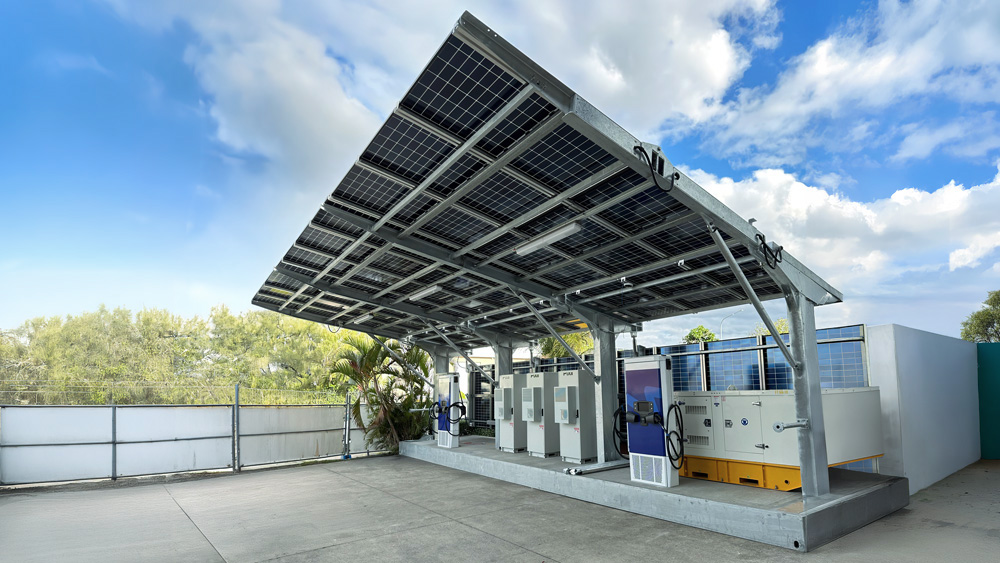
Estonia has many small and medium-sized solar parks. These sites produce clean energy, but most of them share the same challenge: they generate most of their electricity in the middle of the day, when prices are often lowest. When evening prices or short price spikes occur, PV owners have no way of taking advantage. As a result, many parks earn less than they could.
When these PV parks were first built, the situation was different. Some were designed for self-consumption, some were built to sell excess electricity under earlier support schemes, and many were added as low-risk investments when solar equipment became cheaper. Over time, however, more and more PV has been installed in Estonia. This has pushed down mid-day prices and changed the business case for many existing systems.
This is where energy storage enters the picture. While PV owners cannot change when the sun produces energy, storage allows them to shift when that energy is delivered to the grid. Instead of selling electricity immediately at low mid-day prices, they can store it and export it later, during hours when prices are higher. This protects them from low-price periods and increases overall revenue. And importantly, recent market changes make storage far more attractive than it was just a year or two ago.
Market changes create new opportunities
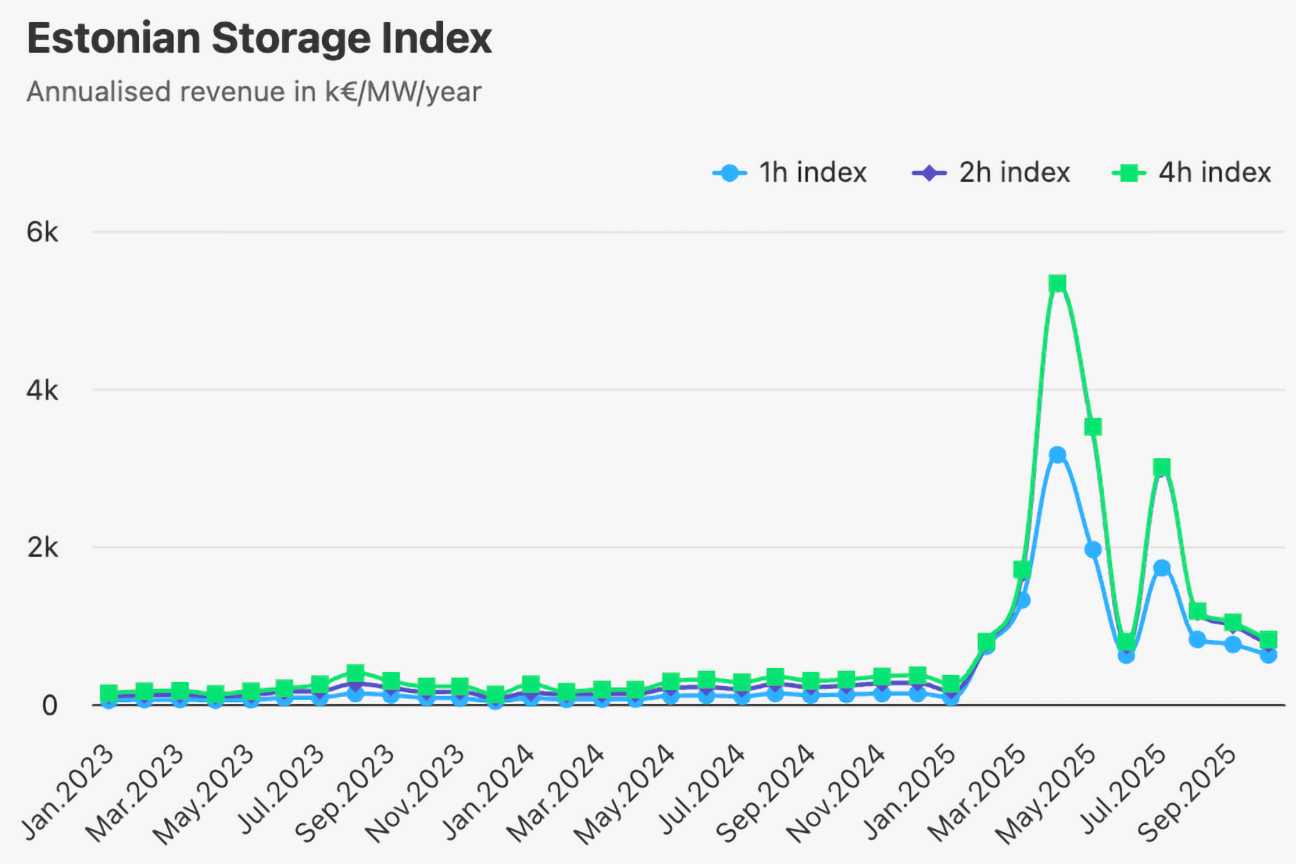
Data from the Clean Horizon Storage Index shows a clear shift. Through most of 2023 and 2024, the potential revenue for storage in Estonia was modest. But in early 2025, earnings increased sharply, and by spring 2025 the index for 4-hour systems passed 6,000 €/MW/year, with shorter durations rising in parallel. This volatility is exactly what makes storage profitable, and it now happens often enough to give small PV parks a real advantage.
A better match between technology and site size
One of the biggest barriers for smaller PV parks has been the size of available battery systems. For years, most commercial solutions started around 100 – 125kW, far larger and more expensive than what a 40–50kW PV park needs. Because of this, storage simply did not fit the economics of smaller sites.
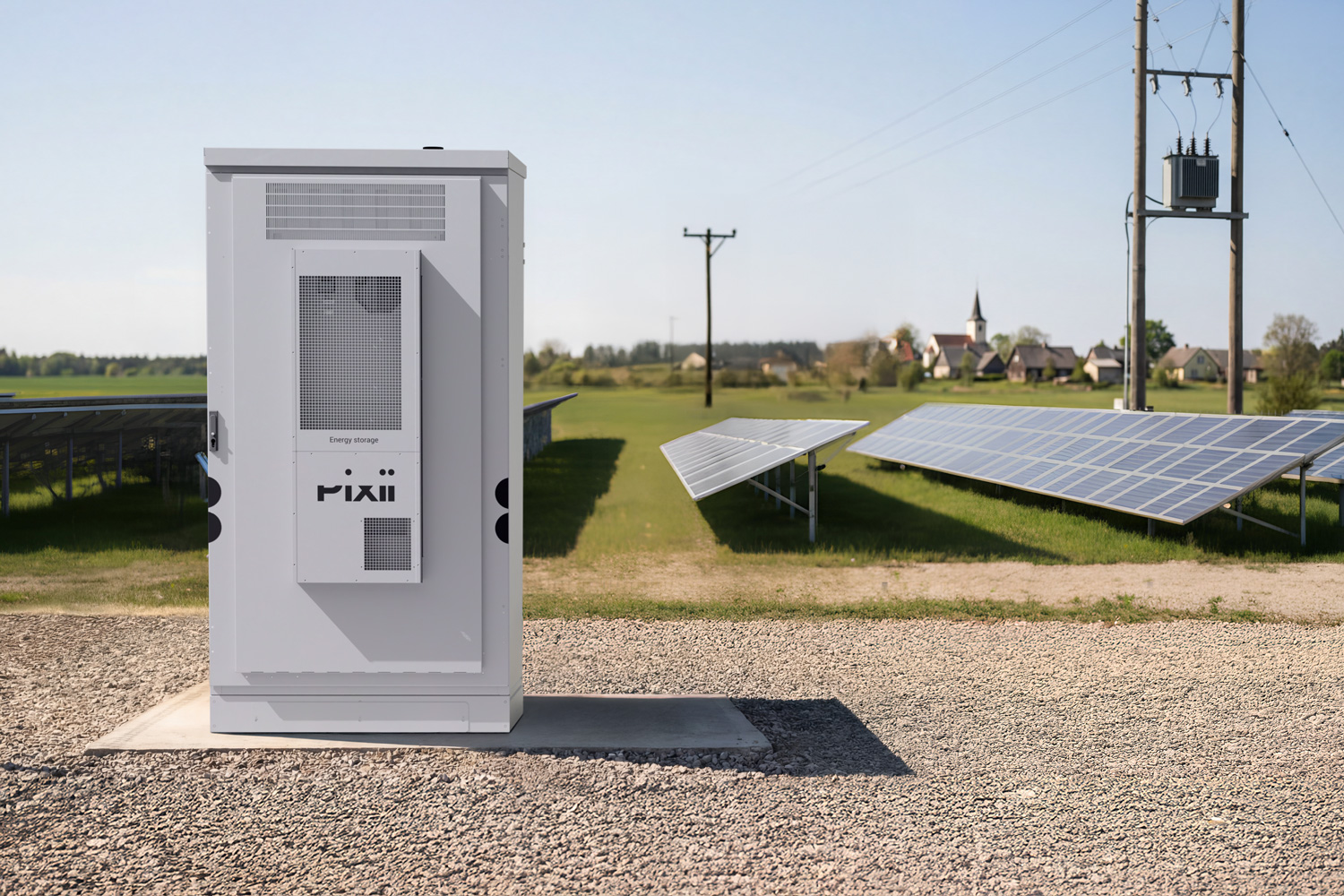
Today, that is changing. The market is moving toward smaller and more modular battery systems that better match the needs of distributed PV sites. Pixii is one of the few suppliers offering a solution specifically shaped for this segment, with a split-system configuration where each unit delivers 50kW of power and 112.5kWh of energy. This allows small PV parks to add storage at the right scale, without being forced into oversized 100 – 125kW factory-default systems designed for much larger installations.
With today’s electricity market conditions, systems that take part in the available energy markets – such as Day-Ahead trading, FCR, aFRR and mFRR – often reach a payback time of around 2–3 years. By storing energy during low-price hours and selling when prices increase, owners can make better use of their existing PV production. This also reduces exposure to price drops and helps stabilise revenue over time.
A natural next step for many PV owners
As Estonia continues to add more renewable energy, price variations are expected to remain part of the system. Energy storage is a simple and effective way for small PV parks to adapt to this new reality. It can increase income, reduce uncertainty and strengthen the long-term value of existing PV investments – all without expanding the size of the solar installation itself.
Pixii develops modular, European-built battery systems designed for reliable long-term operation. For smaller PV parks, compact systems such as the 2 x 50kW/112,5kW split configuration make it possible to add storage without over-investment, providing a practical and scalable way to access the growing value of flexibility in Estonia’s electricity market.